
Podcast in English
Text size
Bulgarian National Radio © 2025 All Rights Reserved

Highlights of Bulgarian musical culture: Composer Veselin Stoyanov's Rhapsody

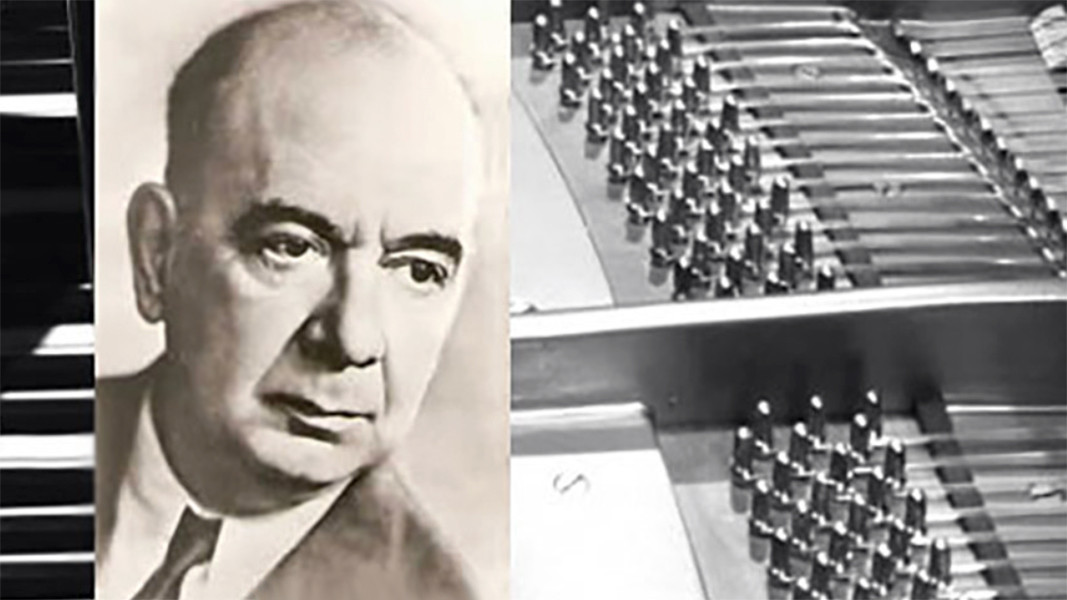
Veselin Stoyanov (1902 – 1969)
Photo: archive


According to authoritative musicologists, Bulgarian composer Veselin Stoyanov is "an interesting and in some respects contradictory personality, already somewhat forgotten". Since the beginning of the new century, there has been an opinion that his work is "beyond the interest of Bulgarian musicology". Out of the interest of Bulgarian musicology - what a pity! 

Veselin Stoyanov's contribution to Bulgarian culture and especially to Bulgarian musical education is more than worthy. It is not by chance that the National School of Arts in Ruse is named after him.

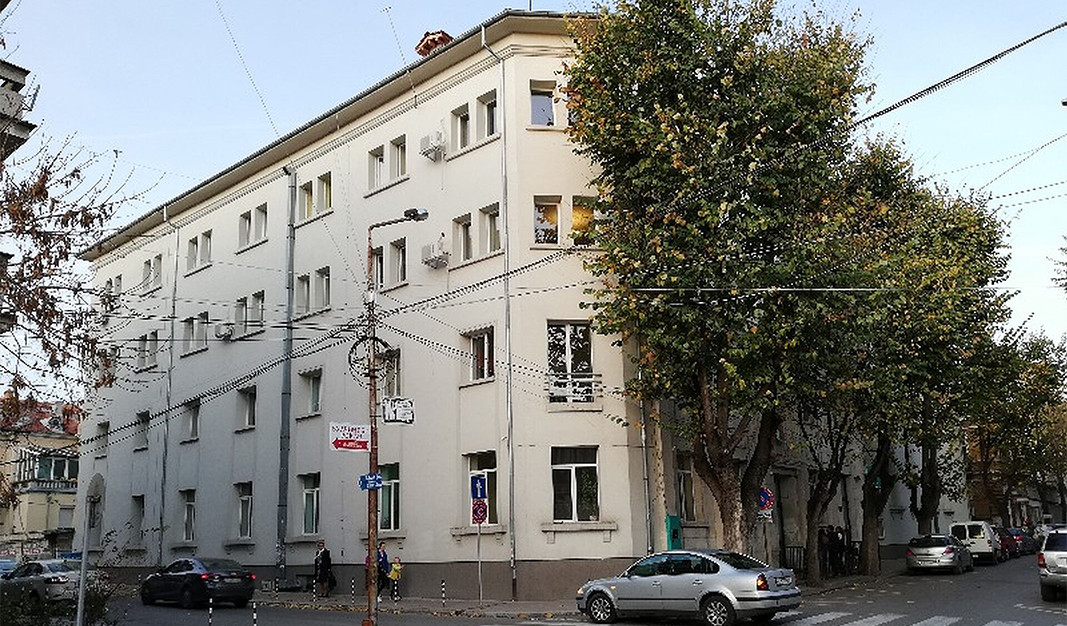
The National School of Arts Prof. Veselin Stoyanov in Ruse
The exceptional musician grew up in the family of the prominent Shumen-born composer, pedagogue and public figure Anastas Stoyanov. At the Music Academy he was trained by his older brother Andrey Stoyanov - a famous pianist, composer, pedagogue and theorist, academician of the Bulgarian Academy of Sciences. The younger brother Veselin began giving private lessons in piano and music theory immediately after his return from Vienna, where he graduated in piano and composition at the Academy of Music and Dramatic Art. 

At the age of 35, he was appointed a lecturer in music theory at the State Academy of Music in Sofia. From 1945 he was a professor of composition and musical forms, from 1952 – dean of the theoretical faculty, from 1956 to 1962 – rector of the Bulgarian State Conservatory (as the academy was renamed). In the early 1950s, he was the director of the Sofia Opera for a while, but his most serious contribution was pedagogical. Veselin Stoyanov introduced talented and valuable Bulgarian artists such as Todor Popov, Dimitar Petkov, Stefan Remenkov, Ivan Marinov, Alexander Tekeliev, Viktor Chuchkov to the profession of composer.

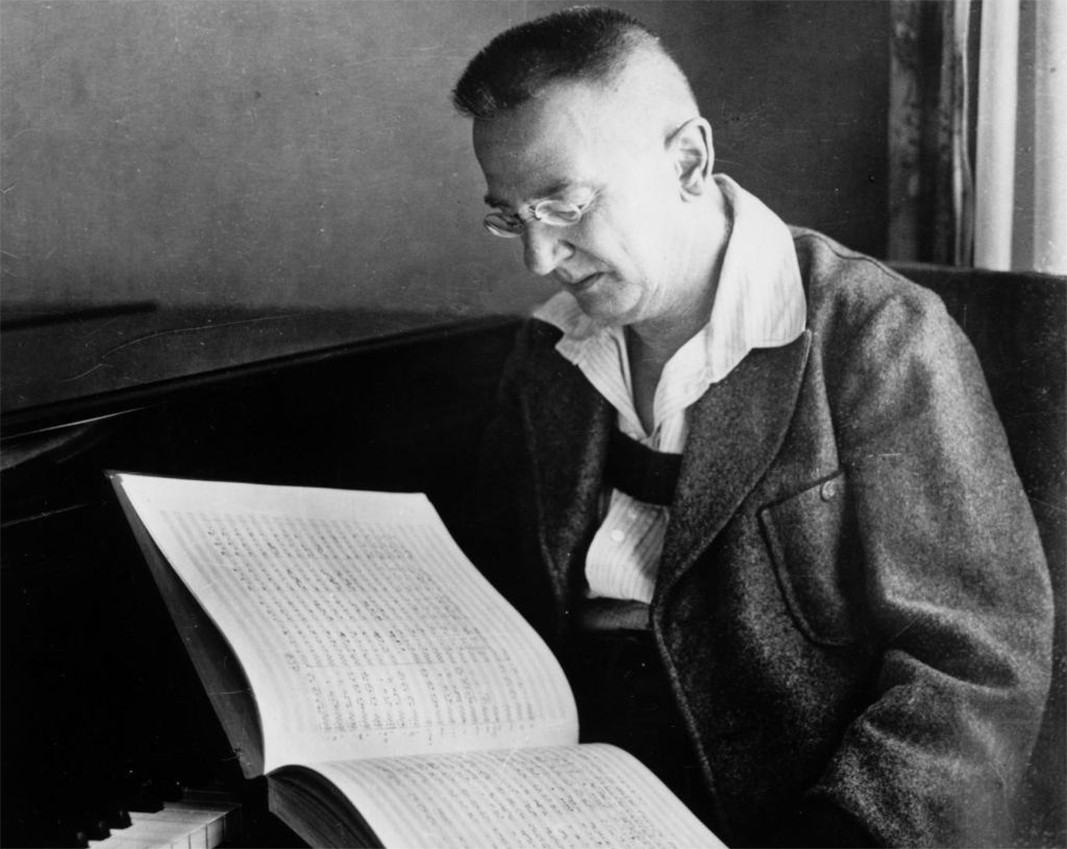
Composer Franz Schmidt, professor of Veselin Stoyanov in Vienna
The great legacy that they inherited from their professor is not only the result of their studies with Franz Schmidt in Vienna. These are the concerts of the Vienna Philharmonic and the performances of the Vienna Opera; the extensive knowledge of the works of Mozart and Beethoven, Brahms and Wagner, Bruckner and Mahler, Richard Strauss, Arnold Schoenberg and Alban Berg; meetings with world musicians: Rachmaninoff, Horowitz, Kreisler, Huberman, Gieseking, Backhaus... 

In a letter to his relatives from the time of his studies in Vienna, Veselin Stoyanov pays special attention to the composer Schoenberg. The traditional and the modern in art, perceived and understood, influence his own composing style, the formation of forms, and the orchestration. When he returned to his homeland, the Viennese experience was synthesized with his knowledge of Bulgarian folklore. The result was his first opera, Female Kingdom, and the symphonic masterpiece - the suite Bai Ganyo

His colleagues call him "the orchestra virtuoso" because of his profound instrumental thinking, dramaturgically developed symphonization, the use of leitmotif technique, rich harmony and lush, often exotic orchestration.

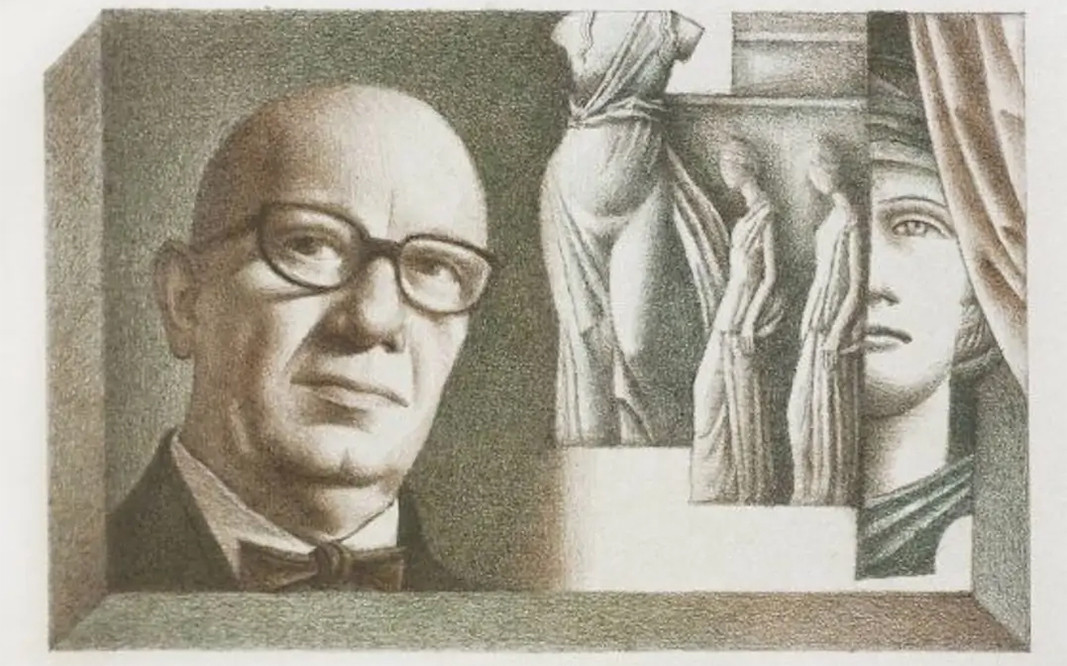
Portrait of Veselin Stoyanov, 2002, author: Atanas Atanasov
Two aesthetic positions are present in his work. The first stems from the general concept of the national for his generation - necessarily tied to folk art. The second is the desire to express his own personality without inhibitions and without fitting into an established, imposed system. This artist constantly seeks a balance between his personal and officially established tastes. Vivid examples are the opera Salambo as well as the ballet Popess Joan.


Veselin Stoyanov has long been a recognized classic, some of his instrumental works continue to sound on the Bulgarian stage, and the appeal of the symphonic suite Bai Ganyo and his Festive Overture is more than relevant. 

And yet the Rhapsody, created specifically for the Bulgarian National Radio in 1956, is the true emblem of this Bulgarian composer. Often  performed by Bulgarian orchestras from the 1950s to the 1980s, it is still a landmark Bulgarian classic. The bright and inspired score demonstrates the most characteristic features of its author's style - captivating emotionality, magnificent orchestration, inimitable melodic and harmonic nuances. 

We offer you Veselin Stoyanov's Rhapsody in a classic performance - by the Bulgarian National Radio Symphony Orchestra conducted by Vasil Stefanov.       


More episodes from Radio Bulgaria's series presenting the Highlights of Bulgarian musical culture:

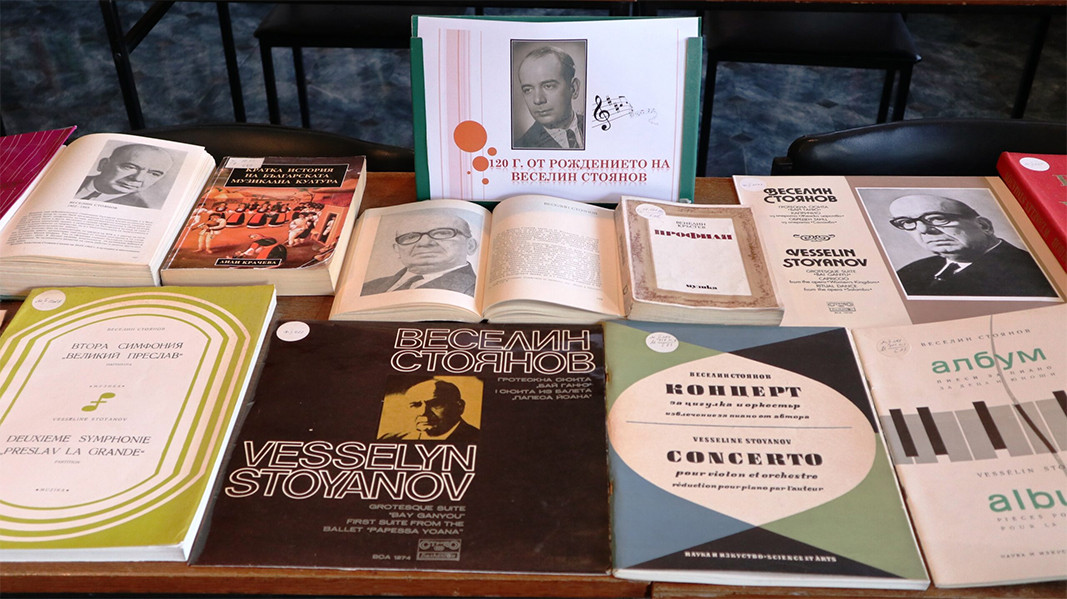
Photos: archives.bnr.bg, bg.wikipedia.org, orgelwettbewerb.at, library-haskovo.org, archive

English publication: R. Petkova


Последвайте ни и в Google News Showcase, за да научите най-важното от деня!
Listen to the daily news from Bulgaria presented in "Bulgaria Today" podcast, available in Spotify.

More from category

Popular duo "Molets" presents its new album

The popular duo "Molets" will present its new album “ Paraklis” (Chapel) with two concerts in Hall 1 of the National Palace of Culture in Sofia - on November 4 and 5. The songs will be performed in specially created acoustic..
published on 11/4/25 11:19 AM
Cantus Firmus Orchestra

The Laureates project of Cantus Firmus Orchestra presents the stars of the future

In its successful project "The Laureates", Cantus Firmus Orchestra once again presents to the Bulgarian audience young classical music performers at the beginning of their careers, who have received awards at prestigious competitions...
published on 11/3/25 6:59 PM
Momchil Kossev

Singer Momchil Kossev looks to the future with optimism

We first noticed Momchil Kossev when we were introduced to the band SoulBmoll, where he is the guitarist, vocalist and main songwriter. The musicians from the band are favorites not only of the audience but also of many Bulgarian stars who work with..

published on 11/3/25 11:27 AM