Is it time for lowering the voting age? This question has sparked discussions for a long time across the world. First steps in this direction were taken in countries such as Cuba, Brazil, Argentina. Europe is quite slow in comparison. Lowering the voting age was tested in some German provinces in the mid-90s, several Swiss cantons, and later Scotland. Austria first decided to make it its state policy. The issue is on the agenda of almost all European countries. Lowering the voting age is also recommended by the Parliamentary Assembly of the Council of Europe. The idea has its supporters in Bulgaria, both among political parties and among youth organizations. First to show sensitivity about the issue were parties that have more supporters among the youth. "The Greens" is one of these parties.
 Here is more for co-chairman of the party, Borislav Sandov. “Nowadays, with new communication technologies that provide tremendous access to information, young people gain intellectual maturity fast. That is why it is reasonable and logical to give people, aged 16 or 17, the right to vote. Their future depends on the decisions they make today."
Almost everywhere in Europe many young people aged between 18 and 24 do not vote. A number of analysts say that this is due to the fact that they are given the right to vote too late. "The more you make young people wait before getting their right to vote, the less willing they are to engage in political processes," experts say.
Almost in each country where 16-year-olds were given the right to vote, young people showed strong desire for active participation. José Bové and quite young Ska Keller will lead the European Green Party's campaign for the EU elections in May, it was recently announced.
"The Green Party held an initial poll about their leading candidates in coming European elections, which give the right to people at the age of 16 to participate. There were many voters between 16 and 18 and a candidate of the youth organization of the party received most of the votes. I definitely see that young people are eager to participate in political life. "
In the backdrop of ageing European population it is a reasonable question whether to allow the elections to include a broader category of young people in order to balance the votes of an increasingly large share of elderly population.
Borislav Sandov sees another possible positive effect - political life could keep young people in the country.
“Many young people go to study or work abroad and often stay there, which is a big problem for Bulgaria. One of the reasons is that they are not involved in any way in decision-making processes in Bulgaria. And then they do not feel involved in what is happening in our country, which is alarming. Giving young people the right to vote could make them more engaged and motivated in trying to change the situation in this country.”
English version: Alexander Markov

Bulgaria celebrates National Reading Day on the third Friday of November. The Reading Foundation is leading the initiative under the motto: “Read. For Real”. According to the OECD's PISA 2022 study, 53% of 15-year-old students in Bulgaria have..
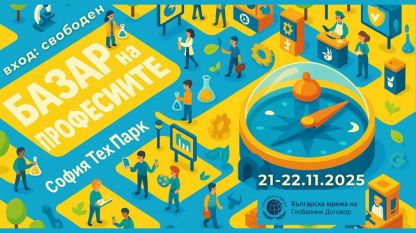
On November 21–22, 2025, the 11th edition of the Career Fair will take place at the John Atanasov Hall in Sofia Tech Park. The forum aims to support early career orientation for young people in Bulgaria and is organized by the Bulgarian Global..

From fear and doubts to joy and support – Bulgarians react differently to the upcoming introduction of the euro on January 1, 2026. For some, it is a logical step towards Bulgaria’s integration into the EU with promises of stability..



 Cloudy
 Mostly Cloudy
 Partly Cloudy
 Fog
Fog