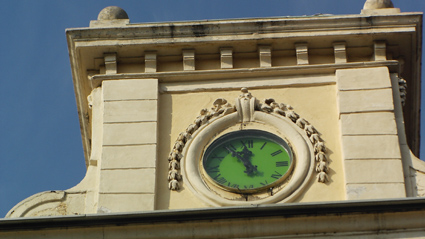
On March 30, we are moving our clocks one hour forward to observe Daylight Savings Time. So it seems the spring fatigue is not enough but here's now a time shift as well. But who is asking us whether we want or not to experience the so-called desynchronization (or divergence of the rhythm of the body with chronological time), and the ensuing harm to our human body and psyche.
The data provided by the World Health Organization on this issue speaks volumes. Nearly 45 percent of people in Europe, including in Bulgaria, suffer from insomnia. The abrupt change of the biological rhythm affects the center for regulating sleep and wakefulness which is located in the brain. And the results are really startling because people who suffer from insomnia are really unable to cope with their daily duties and on top of that they could even be dangerous to others. Many physicians say that moving the arrows forward or backward provokes recurrence of cardiovascular, neuropsychiatric, endocrine and other chronic diseases. It has been shown that sleep deprivation slows down metabolism and triggers depressions and increases the feeling of anxiety. Not to mention that it also affects the memory. According to this black statistics, in the period of this time change in 70 countries (out of 185) the number of people calling an ambulance increases by 12 per cent. Heart attacks alone jump by 75 per cent, and suicides in this period increase by 66 per cent
It is worth giving this some serious reflection, right? Why did countries like China, India, Japan, and more recently Russia cancel the time change? Well, for the simple reason that it does not carry particularly large benefits for the economy. As for Bulgaria, this whole complicated process is for a mere six hours of saved electricity for lighting. That makes 54 stotinki of savings per capita per year, which is a meager sum. Didn’t we switch to energy-saving light bulbs because of European standards. Again for European solidarity we change the time. And no matter how much experts might advise us to go to bed early, do physical exercise, what’s the use when our feeling of wellbeing drops below freezing? Anyway, there are the positive sides to this as well as after two or three weeks of adapting to the change, we will be able to enjoy long afternoons, romantic walks in the park and more time for our loved ones!

Bulgaria celebrates National Reading Day on the third Friday of November. The Reading Foundation is leading the initiative under the motto: “Read. For Real”. According to the OECD's PISA 2022 study, 53% of 15-year-old students in Bulgaria have..
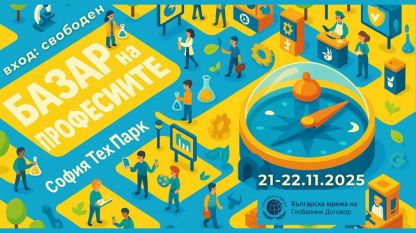
On November 21–22, 2025, the 11th edition of the Career Fair will take place at the John Atanasov Hall in Sofia Tech Park. The forum aims to support early career orientation for young people in Bulgaria and is organized by the Bulgarian Global..
From fear and doubts to joy and support – Bulgarians react differently to the upcoming introduction of the euro on January 1, 2026. For some, it is a logical step towards Bulgaria’s integration into the EU with promises of stability..





 Partly Cloudy
 Mostly Cloudy
 Fog
Fog