The town of Klisura has always been a symbol of patriotism and dignity, recalling the 1876 April Uprising. All its citizens acted as one back in those days, turning themselves into heroes of the liberation struggle. The battle was uneven - witnesses said that the whole valley around the town was literally covered with the Bashi-bazuk hordes of Tosun Bay. Those were 2,000 against 200 rebels with really bad weaponry. The squad of Ivan Tankov Kozarev, 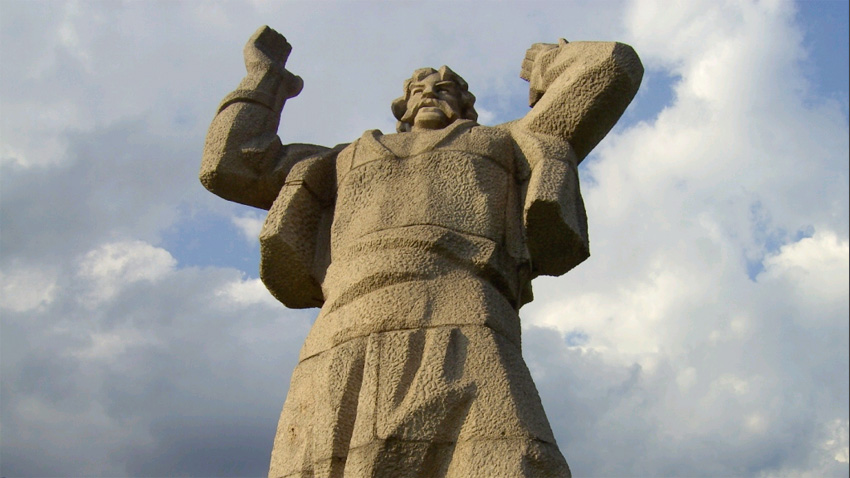 aka Borimechkata /Fighting with Bears/, took part in the defense of Klisura. The cherry cannon that had been prepared to push away the enemy is nowadays the symbol not only of Klisura, but also of that peak moment of our revolutionary history, when the Bulgarian people decided to fight. Today everything in the beautiful Balkan town recalls those events. The monument to the Borimechka with the cherry tree cannon stands like a guard at the Zli Dol historic area. The Klisura heroes are brought back to life each next year on May 2 via a thrilling recreation of the 1876 events. Everyone gets prepared for that day: from students to museum workers and the descendants of the heroes. “The faith of Klisura was tragic not only during the uprising, but afterwards as well,” Director of local History Museum Stoyan Ivanov says and adds:
“When the decision was taken for the rebellion to start, Klisura was a part of the 4th revolutionary district with Panayot Volov and Georgi Benkovski being the apostles there. Those had come here to restore the old committee, established by Vasil Levski. The latter had visited the place twice and a secret revolutionary committee had been created the second time, with the assistance of Angel Kanchev. The rebellion’s preparation kicked off in the spring of 1876, when young and well educated Nikola Karadjov returned to his hometown. He spoke 7 languages and was quite wealthy, a teacher at the Plovdiv high school. The youngest and most progressive inhabitants of Klisura were actually the ones, who took the faithful decision. Nikola Karadjov was a delegate at the Great National Assembly in the Oborishte area and was assigned with the committee that determined the date of the uprising. On April 20 /the old style/ Nikola was in the town of Koprivshtitsa and witnessed the start of the rebellion. We, people of Klisura, are really proud of him signing the so-called “blood letter” of Todor Kableshkov, addressed to the revolutionaries in Panagyurishte, urging them to kick off the struggle. Karadjov added: “I witnessed what’s been described here and I am about to take off for Klisura to do the same thing.” Unfortunately the preparation and premature breaking out of the uprising meant failure. During the second Ottoman attack on April 26 the town was taken over and demolished. There were about 400 victims – mostly children, pregnant women and elderly people, who didn’t have the chance to save themselves, fleeing to the neighboring town of Koprivshtitsa”.
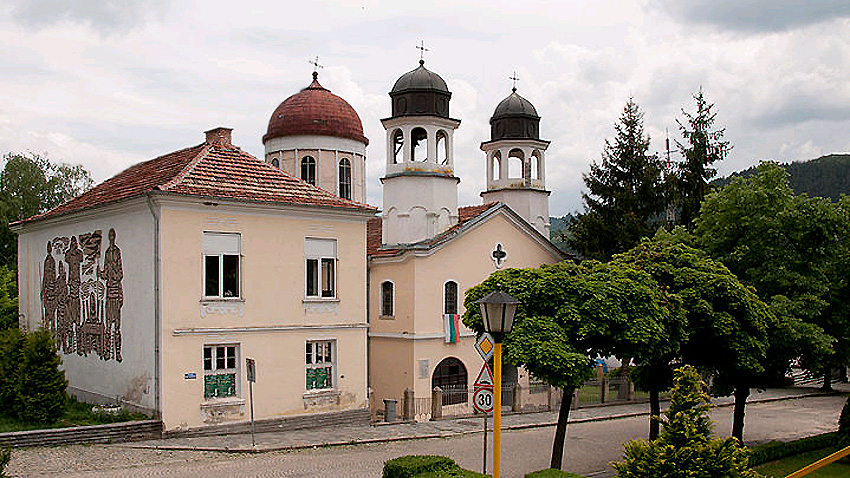
The Assumption of the Virgin Mary Church in Klisura was what called the new temple. It was built more than 120 years ago, when the whole town had to be restored. Lalo Botev, the man, who accepts the care of the place as his mission in life, gives us more details:
“There is some divine power under the major dome of the church that heals and makes the body look for peace and rest here,” Lalo Botev says. “This is the new temple, our rebels used to store the gun powder for the uprising in the old one – St. Nicholas. The weaponry was also placed there in secret, at night. Klisura was proclaimed a republic after the start of the revolt and it lasted for 6 days. However, after the devastating invasion of the hordes “the voice of the cherry tree cannon echoed across Europe”. A decree was issued, after interference from abroad, reading that all people should be taken back into their homes. Two journalists witnessed at that time 38 Klisura citizens, marching through the Varlichnitsa area, as those had spent 38 days wandering around the forest. The journalists asked in surprise why the people tried to return to a place without a single house remaining. The oldest man in the group, grandfather Stoyko replied with another question: “Are there skies above the place?” “Yes, there are…” “So, we will build up a new Klisura then!” the old man exclaimed. They never restored the old St. Nicholas temple that had proclaimed the revolt with its bell. A new church was constructed, named after the Virgin Mary because of the icon, which a small boy had managed to hide underneath its coat while fleeing. The people saw a good sign in that and returned with faith, in order to restore their Klisura from the ashes,” Lalo Botev says in conclusion.
English version: Zhivko Stanchev
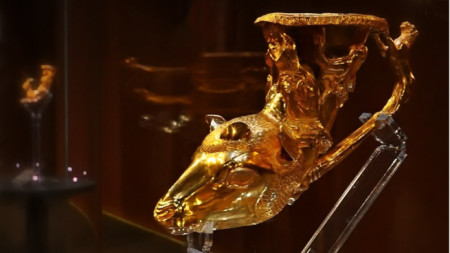
From 16 September, the History Museum in Panagyurishte will be hosting the original Panagyurishte Gold Treasure. The priceless find will be displayed in the museum’s secure vault hall, where it can be seen until October 23. The treasure will be on..
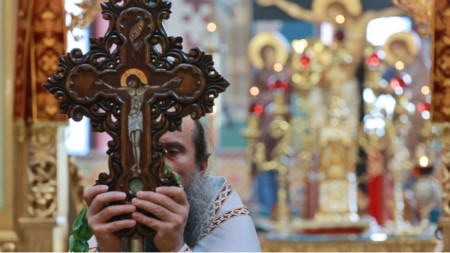
On September 14, the Bulgarian Orthodox Church bows down before the cross on which Jesus Christ was crucified . The Exaltation of the Holy Cross of the Lord or Cross Day is one of the 12 great Christian holidays. It is one of the four days..
Today, Bulgaria celebrates the 140th anniversary of the Unification of the Principality of Bulgaria and Eastern Rumelia. The center of the festivities is Plovdiv, where on this day in 1885, after the entry of the Golyamo Konare detachment into the..





 Partly Cloudy
 Mostly Cloudy