
More and more Bulgarian companies from the IT sector are doing business abroad, with prestigious clients. One of these firms is Ontotext which works in the field of automatic text analysis and has recently announced the launch of a project on the website of the British media The Financial Times. The project is about an innovative technology developed by the Bulgarian company that allows recommending content tuned to the interests of users of the website. Ontotext is well known in the UK with another several major projects as they updated the technology used by the sports portal of the BBC, including the FIFA World Cup 2010 and the 2012 Olympic Games.
According to Borislav Popov, one of the company managers, the media market has gradually become the largest consumer of linguistic technologies related to automatic text analysis, because this enables offering readers more articles from a given website in the form of various thematic pages that are put together automatically according to their interest or profile. However, this technology is not cheap at all, explains Borislav Popov:
"So far, these services are quite expensive. The media should have a sustainable business model in order to allow such an innovation. Our customers in the UK and the US invest between one to ten million from the respective currency in such a project. Part of our work this year will be focused on dropping the price by offering products and not customized solutions for each client. Within the first two quarters of this year we plan to release several products aimed at publishers and media."
Except in media, the technology developed by Ontotext can be applied also in education, e-learning, the pharmaceutical industry and healthcare.
In education, the company works with major publishers abroad, and also with some innovative companies for active learning in the United States. The developed platform offers lessons with different levels of complexity according to how well the students have coped with similar tasks up to that point. The goal is not to place unreasonable barriers to the learner, but to have an approach starting from easier tasks to more complex ones as ultimately each of the students gets as much benefit as possible. The electronic system only supports secondary education as the leadership role is still with the teacher, as ever before. In Bulgaria there is much talk of e-learning, but it never happens centralized. Where does the circuit break? According to Borislav Popov – it is due rather to the lack of good will rather than of resources:
“It is impossible for me to predict all the relationships that one must manage if trying to develop similar projects with a Bulgarian institution. This unpredictability makes education less attractive as a business opportunity. I do not think that we need some exorbitant budgets in order to make an electronic portal for education. In such a process, the content is expensive, not the software infrastructure itself. And anyway it is produced by publishers in Bulgaria, so this is more a question of the desire to have such an initiative, not of money. Software companies like us have always responded when they can help in Bulgaria. We have done this at the university level; we did it at the level of secondary education, too."
Practice shows that although some publishers do not report the changes, the Internet and new technologies are gradually putting to the test the business model of many of them.
English Rossitsa Petcova
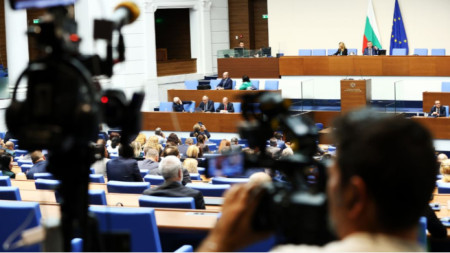
The draft state budget was adopted in first reading by the National Assembly on November 21. However, the planned changes in the financial framework for 2026 triggered an open clash between the ruling coalition, led by GERB party, and the opposition..
KBC Group expects the Bulgarian economy to grow slightly more next year in comparison to its previous forecasts, according to the conclusions of the Belgian financial group's latest assessments of the economies of Central and Eastern..
Foreign direct investment (FDI) in Bulgaria posted the largest net inflows from the Netherlands, Italy and Greece in the first half of 2025, the Bulgarian National Bank (BNB) said. Net FDI inflows totalled €554.9 million from the Netherlands, €325.2..






 Scattered showers
 Cloudy
 Cloudy
 Rain / Snow