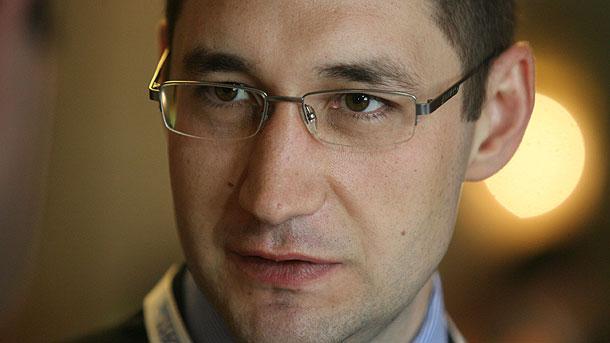
The Ministry of Finance has recently boasted with preliminary data, showing that a surplus of 15 percent, or around EUR 600 million was registered in the end of the first trimester.So far, so good, they say. However, let’s ask the questions: "How does the state spend our money?" and "Why don’t we see the effect?"
Economy expert from the Open Society Institute Georgi Angelov says there is no effectiveness in the spending of this money – hence the lack of a better result.
Social expenses form no less than 50 percent of the budget, as 50 percent of the population lives on public aid or pensions.
“Many people retire in Bulgaria far before reaching their retirement age,” says Georgi Angelov. “These are the so-called young pensioners, who can also contribute, but wouldn’t do it and significant funds are spared for them. Police officers, military men and other social groups still have that privilege of an early retirement.”
The share of young people that neither study nor work is big. Many people rely on welfare and so their standard of living is low.
“Social payments should be aimed really at those people, who can’t work or are temporarily unavailable on the labor market,” the budget analyst states. “The way out is locked in the so-called economy policy, or allocation of funding to activities that open new jobs, creating economic growth and revenues.”
Bulgaria is among the leading EU member-states with some 10 percent of budget money spent on the maintenance of its police and judiciary system. At the same time everybody thinks that these two institutions often throw responsibility at each other, making organized crime representatives the winners.
The directing of such resources at activities, that are not effective means that important spheres like education with the long-term positive effect of its investments suffer less funding. The solution looks simple, but we don’t know how to do it.
“Most programs of the social ministry are ineffective – we paid those people to sweep the streets”, Angelov goes on to say. “We could invest, instead, in their skills, thus helping them to return on the labor market. Education is a key point for both the emigrants in Bulgaria and the minorities that are not well-positioned on the labor market.”
Furthermore, the long-term solution is:
“More competitiveness of the Bulgarian economy, since this might slow down the pace of emigration abroad, bringing Bulgarian citizens back. That requires a better investment climate, in order for investors to be attracted…”
A great part of budget money is siphoned via the support provided to state enterprises that are losing money, such as the Railways /EUR 250 million per year/, the non-transparent National Electric Company (NEC), swallowing around EUR 600 million annually, the agricultural support with the same budget. However, those result neither in higher productivity nor in the opening of new jobs. Many producers find it easier to take the subsidies and produce less.
The current government has set very ambitious goals for over 1,200 reforms in different sectors, Angelov goes on to say:
“The problem is that practically not a single major reform has been completed. There mustn’t be a single buyer of electricity, NEC - and there is no liberalization at all. Obviously this unnecessary intermediary should disappear, allowing us to buy electricity directly from the producer – thus the cheapest and most effective producers will win their market share, while the rest should lose theirs. The clash between those, winning from the monopoly and all the rest that could profit from the liberalization, still remains vague in terms of results.”
That is how a new class of heroes with lots of power and practically no responsibility or accountancy is being raised. Those play games with the system and we pay the bill.
English version: Zhivko Stanchev
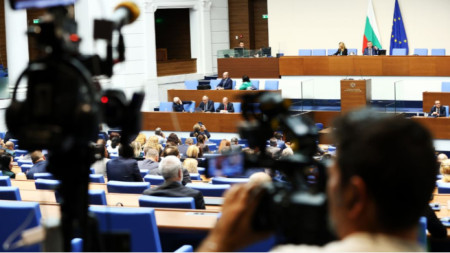
The draft state budget was adopted in first reading by the National Assembly on November 21. However, the planned changes in the financial framework for 2026 triggered an open clash between the ruling coalition, led by GERB party, and the opposition..
KBC Group expects the Bulgarian economy to grow slightly more next year in comparison to its previous forecasts, according to the conclusions of the Belgian financial group's latest assessments of the economies of Central and Eastern..
Foreign direct investment (FDI) in Bulgaria posted the largest net inflows from the Netherlands, Italy and Greece in the first half of 2025, the Bulgarian National Bank (BNB) said. Net FDI inflows totalled €554.9 million from the Netherlands, €325.2..





 Overcast, rain
 Rain / Snow
 Cloudy
 Scattered showers
 Cloudy
 Rain
Rain