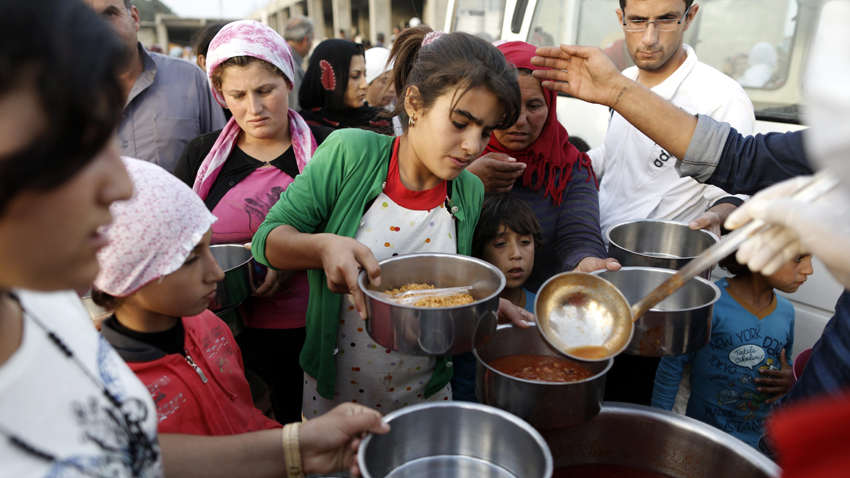
The EC has proposed the introduction of a quota of 20,000 within the EU for resettlement of refugees. The Commission will offer by end-May a mechanism for displacement of refugees, whose applications for stay have already been approved. Another system will be proposed by the end of the year – a system for resettlement of refugees in cases of emergencies with a large-scale inflow of people. Some member-states do reject the Commission’s idea, while others really support it. Bulgaria belongs to the second group for a long time, and for some serious reasons, too.
Bulgarian MEPs proposed the introduction of a quota principle for the admission of refugees as early as October 2014, as a way of distributing the burden of responsibility in compliance with the economic situation, the size of population and the territory of the respective country. Back at that moment, yet before the next spring wave of refugees towards the borders of Bulgaria, the capacity of the accommodation centers had already been 61% full and several member-states, Germany, Austria and Hungary among others, intended to return immigrants here, as this country had been the initial EU member-state of registration.
Now the EC proposes two schemes for redistribution of migrants – moving and resettlement. Respective quotas of 1.25 and 1.08 percent are envisaged for Bulgaria under these schemes. It is important for this country not only the number of refugees to be limited, but also other countries to get engaged in their admission too – and some still refuse to do it. The displacement proposal also points out that it concerns people “obviously in need of an international asylum in Europe”. That definition will undoubtedly ease Bulgaria in refusals whenever people look for asylum due to economic reasons and not for survival.
At the same time the EC proposes a new policy for legal migration via the updating of the blue card scheme (for economic migration of highly educated applicants for stay and work in the EU). This is also potentially beneficial for Bulgaria that faces severe HR shortages within certain spheres.
Basically all EU ideas for a new asylum, migration and integration policy are really valuable to this country, being also a prerequisite for taking it out of an unflattering position – being the poorest EU member-state, it receives the least support for coping with these issues. The way they are proposed by the EC, the ideas on a new EU policy for admission of refugees and migration are harmonized with the ideas of Sofia and the latter will undoubtedly continue to defend those within the forthcoming debate.
English version: Zhivko Stanchev
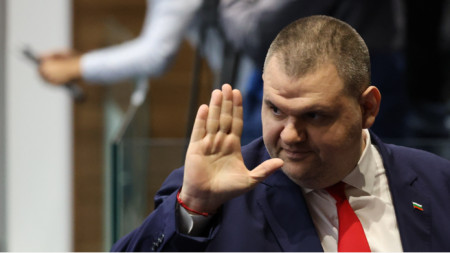
Movement for Rights and Freedoms - New Beginning Leader Delyan Peevski spoke with Prime Minister Rosen Zhelyazkov on Monday, the party's press centre reported. "I reaffirmed my position of full support for the government as long as it works for the..
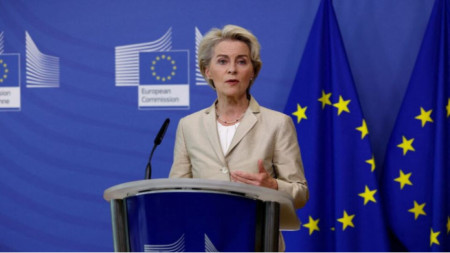
EU roaming fees to be eliminated for Albania and Montenegro Roaming charges between Albania and the EU will be completely eliminated in 2026, European Commission President Ursula von der Leyen said during her visit to..
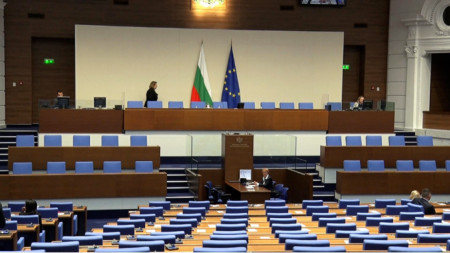
Bulgaria’s Parliament failed to hold a session for the third consecutive day due to a lack of quorum. As a result, the scheduled parliamentary control, usually held every Friday, was also cancelled. Only 29 MPs from We Continue the Change –..





 Rain / Snow
 Rain
Rain Snow
Snow Значителна облачност със сняг