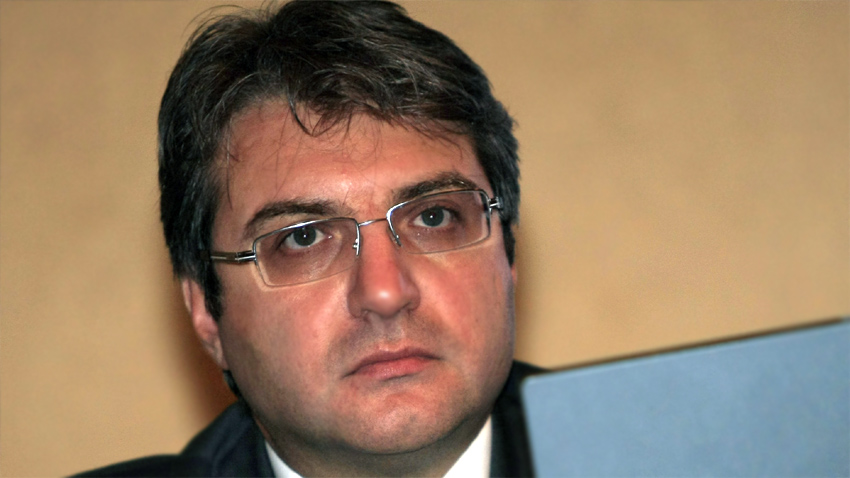
Bulgarians do not find alternative to Democracy and their European development. They are not satisfied with the way democratic institutions function and the way law is enforced in Bulgaria. Large groups of people remain isolated from the country's public life and feel that they are not represented well in the local and national institutions, data of a public opinion survey held by the Open Society Institute between March and April 2015 show.
“The majority of the respondents (nearly 52%) say that democracy is the best form of government and 20% of the polled share the opposite opinion", Executive Director of Open Society Institute Georgi Stoychev told Radio Bulgaria. “The majority of the supporters of all political parties, except for the supporters of the Bulgarian Socialist Party, have a positive attitude towards democracy. According to 40% of the respondents, Bulgaria should follow the example of Germany, which in their view is the European country with the best form of government. 14% of the polled prefer the system of governance of two other liberal democracies - Switzerland and the United Kingdom. Only 6% of the respondents say Bulgaria should follow Russia's example and 2% say China's example is the most appropriate one.”
One of the biggest achievements of this country's democratic system regards the fact that the majority of the people think they can use freely their civil rights.
“There are some exceptions, as some groups of the country's population have the feeling that now they can benefit less from their civil rights”, Mr. Georgi Stoichev went on to say. “The number of people employed by the state, who fear that their critic attitude towards the government would have negative consequences, is twice higher, as compared to those working in the private sector. Some groups are worried that they may become victims of wiretapping and later they may be pursued by the state. The fear of wiretapping is strongest in Bulgaria's capital Sofia, where 42% of the surveyed think they may be subject to wiretapping, whereas only 28% of the population living in the countryside share that view.”
The widely-spread discriminative adjustments cause the exclusion of large social groups in the country's political life. 70% of the polled would not vote for a person of Roma origin who runs for a village or town mayor. 66% of the polled would not cast their vote in favor of a candidate with non-standard sexuality and 62% of the respondents would not vote for a Bulgarian citizen of Turkish origin who runs for mayor. 80% of the polled say they would vote for a female candidate for a town or a village mayor. 68% of the Bulgarian Turks and 50% of the Roma people say they would vote for a female candidate.
“We have ascertained within the frameworks of the survey two huge functional deficits of democracy. The level of inertness is very high in Bulgaria. 80% of the respondents say they do not participate in any form in the country's public life. 20% of the respondents said they participated in Bulgaria's public life, but half of them took part in that process sporadically. 10% of the polled citizens who say that they deal actively in public activities are usually members of political parties and non-governmental organizations, which is way below the average level of all highly-developed European democracies. Half of the surveyed say they did not trust even a single Bulgarian MP from their electoral district. Half of the Bulgarians also feel they are not represented well at the municipal councils.”
“One of the major conclusions of the survey shows that law supremacy is not the only problem of Bulgarian democracy”, Georgi Stoychev says. “77% of the respondents disagree with the statement that Bulgarian law applies equally to everyone. 69% of the people disagree with the statement that legislation is clear and understandable and 58% of the polled Bulgarian nationals claim the law is unjust. If people do not believe in justice of law and do not understand the law, then it is much more difficult to establish supremacy of law”, Mr. Stoychev concludes.
English version: Kostadin Atanasov

The Bulgarian minority in Romania marked a significant event with the official opening of the Bulgarian Inn in the village of Izvoarele (Hanul Bilgarilor), Teleorman County (Southern Romania)- a locality with Bulgarian roots dating back over 200 years...

The 14th edition of DiVino.Taste, Bulgaria’s leading forum for wines and winemakers, will take place from 28 to 30 November at the Inter Expo Centre in Sofia. Over 80 producers from all wine regions will participate, offering tastings of around 600 of the..
Minutes before the second and final reading, at the parliamentary budget and finance committee, of the state budget for 2026, the leader of the biggest party represented in parliament GERB Boyko Borissov halted the procedure and sent the draft bill..




 Mostly Cloudy
 Fog
Fog Partly Cloudy
 Cloudy