On October 25 the Bulgarian voters will most likely have to decide whether compulsory voting shall be implemented here. President Rosen Plevneliev has submitted to the parliament a proposal for a referendum on the matter, simultaneously with the elections appointed for that date. The head of state hopes that in this way he will contribute for a greater engagement of citizens towards the political process in this country, as the motivation of people to participate in polls has been visibly reducing. However, one of the major reasons is that compulsory voting will decrease significantly the influence of purchased votes, as far as the election results are concerned. The unpleasant phenomenon was highlighted once again with the Garmen conflict between the Bulgarian population and the local Roma minority. Though the reasons for the tension were different, the topic was commented by political observers, but also by leading politicians from the governing coalition. Co-chair of the reformist Bloc Radan Kanev openly stated that “ghettoes across the country are tolerated by certain political forces mainly due to the elections, as those purchase votes there on a large scale.”
It turns out that 25 years after the political changes in Bulgaria its citizens still don’t appreciate the freedom of choice. That is why on the eve of elections we still witness in a resigned manner how voters are organized and transported to certain polling stations, in order to cast their ballot for a certain party or how they sell their vote for the miserable EUR 20. No one has been punished yet, despite media stories. Each next journalist investigation confirms the opinion of those, who say their vote means nothing. Disgusted by politics, such people refuse to take part in polls on a large scale. The president tries to reach them with his idea.
However, the political class should persuade them first that they really have a choice at the station, that there is a collapse of ideas that they can identify with, that campaign promises won’t remain simply promises. Then one can discuss whether the obligation can be added to the right of a free choice. Because if on one hand we have the noble intentions of the president to neutralize the purchased vote, on the other stands the unpleasant feeling that the Bulgarian parties are happy with the ongoing situation, where purchased votes actually guarantee the recreation of the political status quo. So, the parliamentary debate on the pros and cons of this referendum will be an interesting one.
English version: Zhivko Stanchev
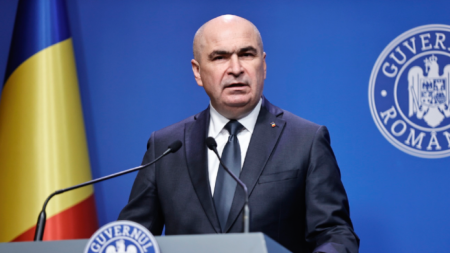
Romania continues policy of gradual budget deficit reduction Romania should end the year with a budget deficit amounting to 8.4%, as compared to 9.4% at the end of 2024, as negotiated with the EU, PM Ilije Bolojan has announced. During his visit..
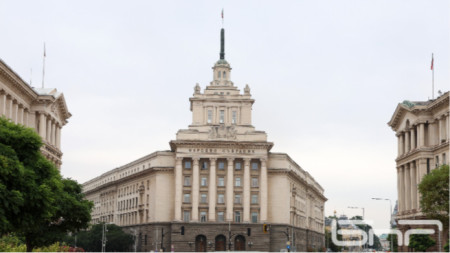
GERB-SDS party maintain their dominance in new parliamentary elections with 26.4%, show the results of a survey by the sociological agency "Trend". The poll was conducted on behalf of 24 Chasa daily through a direct standardized "face-to-face" interview..
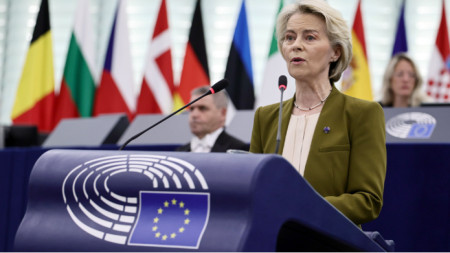
A new path ahead for the European Union – this is what the President of the European Commission Ursula von der Leyen outlined in her annual state of the union address in Strasbourg a few days ago. To summarize – the economic and military..






 Mostly Cloudy
 Fog
Fog Partly Cloudy
 Cloudy