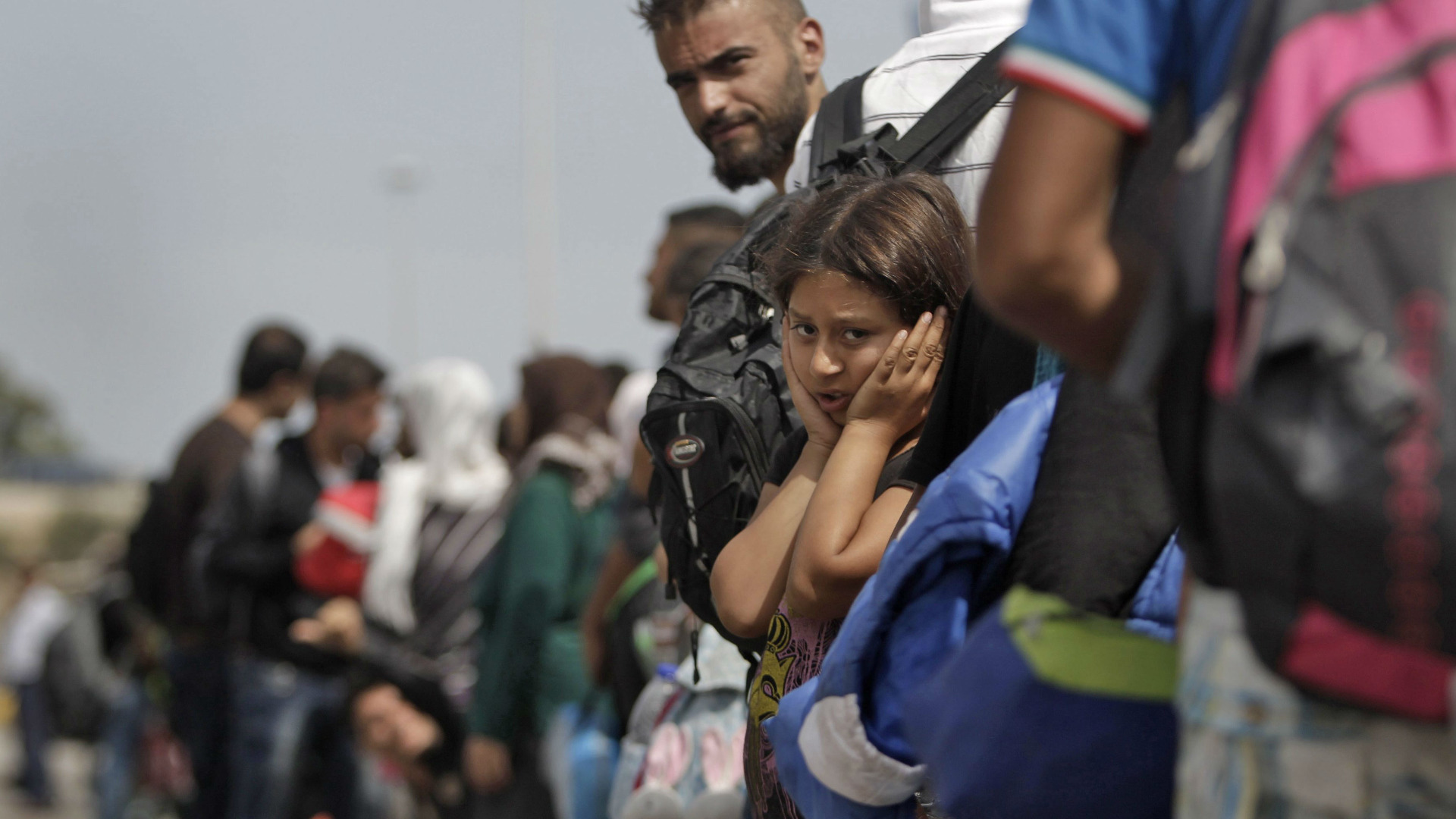
The European Commission and its President Jean-Claude Juncker have gone through a difficult week in search of solution of the heavy refugee crisis. Bulgaria has also had a difficult week because it had to respond to new ideas.
Initially this country had to receive 500 immigrants. Later, their number went up to 1,600. High representatives of the Bulgarian cabinet made it clear that Sofia showed solidarity with the EU measures, but it did not agree with all measures unconditionally. Bulgaria’s Deputy Premier for European Policies Coordination and Institutional Affairs Meglena Kuneva insisted that the refugee quotas must be mandatory for all EU member states. Bulgaria’s neighbor Romania for instance categorically refused to adopt the mandatory quota, which envisaged that that country had to receive a total of 6,351 refugees. Romania’s high officials said that their country would receive a maximum of 1,785 refugees. Deputy Prime Minister Kuneva also shared the idea that the reception of refugees should be linked somehow with Bulgaria’s accession to the Schengen Area.
However, Bulgaria’s Minister of Interior Rumiana Bachvarova disagreed with such idea. Some political analysts presumed that the lack of unanimity could be due to problems in Bulgaria’s cabinet. Minister Bachvarova also supports Bulgaria’s accession to the Schengen Area. However, she insisted that Bulgaria’s accession should be based on the fact that the country had already fulfilled all technical criteria for Schengen membership, because if Bulgaria linked its membership with the refugee issue the country’s accession may be complicated and delayed.
Bulgaria’s Deputy Premier for Demographic and Social Policies and Minister of Labor and Social Policy Ivailo Kalfin expressed solidarity with the proposal of the European Commission regarding the mandatory refugee quotas and pointed out that Bulgaria was able to accommodate the immigrants who enter on its territory. However, Minister Kalfin added that Bulgaria can not oblige the immigrants to stay on its territory without amendments to the Dublin Regulation. Bulgaria can provide to the refugees living and working conditions that correspond to the existing social system and remuneration and will make efforts to provide these conditions to everyone who agrees to join the country’s economic and social life.
In fact, Sofia’s stand does not differ significantly to the positions expressed by most EU member states. Most EU countries insist on a single refugee policy, which is yet to be adopted.
English version: Kostadin Atanasov
Bulgaria’s National Assembly rejected President Rumen Radev’s veto on the amendments that expand the powers of the special commercial administrator of Lukoil, reported BNR’s correspondent Maria Fileva. The MPs from the ruling majority, supported by..
President Rumen Radev has vetoed the legislative amendments related to the appointment of a special commercial administrator in the Lukoil refinery in Burgas. The head of state said that the amendments undermine the legal order in..
Convulsions Before Multipolarity — a Time When Illusions Are Sacred and Truth Is Heresy is the title of a new book that will be officially presented in early November in Sofia. It explores the agony of a unipolar world, an era of geopolitical..





 Mostly Cloudy
 Cloudy
 Partly Cloudy