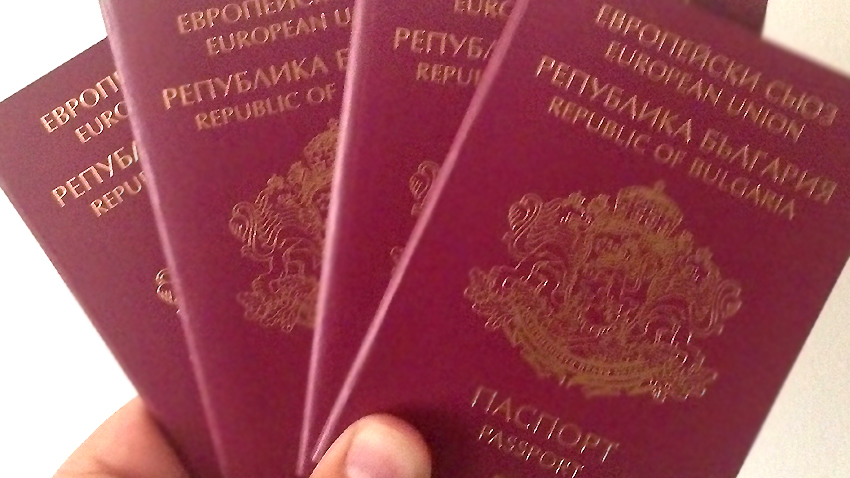
It turns out that Bulgarian citizenship obtained on the basis of Bulgarian national origin is quite attractive and in most cases serves as a one-way ticket for the rich EU countries. For the past 10 years, according to the Ministry of Justice, 120174 applications have been received and some 14.61 percent of them have been rejected. The reason for the increased interest towards the procedure is that it allows for receiving citizenship under a simplified procedure that does not require for a five-year-long stay in the country, income and knowledge of Bulgarian language. The Bulgarian Citizenship Act recognizes the Bulgarian origin of a person with at least one ascendant relative (father, mother, grandfather), who is Bulgarian. Currently, this procedure takes an average of 18 months. Four months takes the Ministry of Interior to run a check up on the person, while the State Agency for National Security checks the person for a year. In 2015 some 5400 applications were received before August 31st and 4400 people received Bulgarian citizenship. According to Deputy Justice Minister Petko Petkov, who is also chairman of the Citizenship Council, the process this year is slower after in 2014 the Prosecution announced that in the period 2011-2013 the State Agency for Bulgarians Abroad issued hundreds of certificates for national origin that were not backed by evidence.
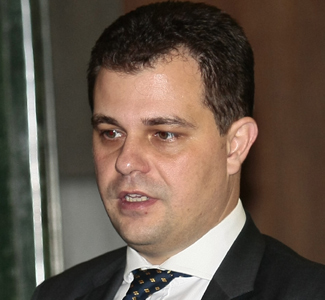 "The agency has a new head, who monitors very strictly the compliance with rules,” Deputy Minister Petkov says. “However, the effects will be seen during the next year. Another problem is that a great number of the applicants do not have necessary documents that prove their Bulgarian origin. Such documents can be found in the military and state archive and responsible people usually manage to find what they need. But there are people, mainly form Albania and Macedonia who encounter problems in proving their Bulgarian origin.”
Boris Vangelov - Chairman of the State Agency for Bulgarians Abroad says the procedure for issuing a certificate of Bulgarian origin has been shortened to some 20 days. But what happens if the applicants do not have an official document of origin?
 "If they do not have such a document, but they are of Bulgarian origin, we accept a document of origin issued by the local organization registered under the Law for the Bulgarians living outside the Republic of Bulgaria,” Mr. Vangelov says. “It is easier for people who live in countries that were part of the former USSR, because they have documents of their relatives, which show their nationality. But in other countries, particularly in Macedonia, there are more difficulties. In Macedonia documents that prove the Bulgarian origin of people have been intentionally destroyed by the local authorities. Few are those who could find the documents they need in our archives."
To ease the procedure for obtaining Bulgarian citizenship by origin a bill for amending the existing laws has been filed in parliament. It envisages that in case of missing official documents certifying origin, this could be proven by a sworn declaration.
"According to me, this solution is too radical, because it allows people who have no Bulgarian origin to declare such,” Deputy Minister Petkov says. “This creates a possibility for terrorists to obtain Bulgarian citizenship. That is why the Ministry of Justice has offered to the public attention the idea of applicants for citizenship to hold test that includes knowledge of Bulgarian history, culture, state structure. This way people would show their commitment to this country. This method has been adopted by almost all EU countries. Germany adopted it in 2008 and the model works quite successfully. This is the direction we should follow but it is not clear when this would happen.”
English: Alexander Markov

The diplomas from the 11th master class in radio journalism of the Bulgarian National Radio – BNR Academy were awarded at a solemn ceremony on November 14. The lectures and practical classes in modern forms of radio journalism build on the professional..
Italy investigates claims of hunting of people in Sarajevo in the 1990s The prosecutor's office in Milan has launched an investigation into shocking reports of organized "sniper safaris" in Bosnia during the war in..
Albania and Bulgaria have joined forces in the name of one more child being born. In the late afternoon of November 7, the first-ever free reproductive medicine checkups, led by Bulgarian specialists, began in the Albanian town of Korçë — a region..




 Mostly Cloudy
 Partly Cloudy
 Cloudy