The number of victims of terrorist attacks around the world has increased by 80 percent in 2014, according to the Global Terrorism Index 2015 (http://www.visionofhumanity.org/#/page/our-gti-findings). According to a study by the Institute for Economics and Peace, the flow of foreign fighters to Iraq and Syria has continued in 2014/2015. Although Russia and the Western countries have the highest rate, according to the index there is also a significant number of foreign fighters from the Western Balkans.
Skënder Perteshi, researcher at the Kosovar Centre for Security Studies, comments on the phenomenon of extremism in an interview for Radio Bulgaria. According to him, extremism in the Balkans came from Egypt during the wars in Bosnia and Kosovo.
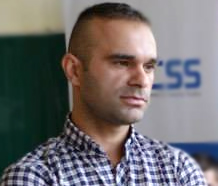 "Extremism or radicalization is a new phenomenon not only in Kosovo but in the entire region, yet it is not a new phenomenon globally. Fighters from the Balkans who go to fight in Syria and Iraq do not necessarily feel hatred towards the West. Most often they depart in order to support Muslims, but unwittingly end up as part of extremist groups. This is a phenomenon which is growing and will continue to grow," Skënder Perteshi says.
According to the analyst, the profile of the fighters is mostly uneducated young men living in difficult social and economic conditions. And the driving motives are diverse: the wrong idea about religion, poor education, corrupt political class, economic underdevelopment and exclusion in the Western Balkans.
Skënder Perteshi sees the fight with extremist not as a struggle with the fighters themselves but with the very ideology.
"Extremism cannot be countered by the Criminal Code, or if you send everyone in jail. There are many leaders who have been in prison and that is where they get the idea to establish extremist organizations. You cannot fight this with imprisonment but with long-term social policies and programs for reintegration. Extremist groups cannot be fought by secular society. Extremism must be fought by the Muslim community, as they consider themselves Muslims and the Muslim community itself considers that they have left the faith. Cooperation with the Muslim community is the most powerful weapon against ISIS. Secular societies in Europe and in our country should be a little more open to believers. For it does not mean that each believer is an extremist. Let us open the debate about what problems we have and fix them. And let us not allow extremist groups to take advantage of our mutual disagreements," Skënder Perteshi contends.
What is the risk for the Balkans when these people begin to return to their homeland?
"I see no direct potential risk for the Western Balkans on the part of the so-called Islamic State. We are not the target of these extremist groups. Their goal may be France, UK, USA, Western Europe, where a terrorist act would have a much greater response. In the Balkans terrorism is not one of the major potential risks. We have a problem with corruption, political stability, and regional cooperation. These are the highest risks as well as organized crime. Extremism has a medium level of risk here," Perteshi explains.
According to the analyst, the lack of stability in Bosnia and Herzegovina and in Macedonia are the riskiest spots of the crisis in the region.
English Rossitsa Petcova
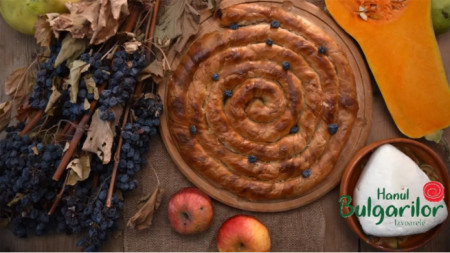
The Bulgarian minority in Romania marked a significant event with the official opening of the Bulgarian Inn in the village of Izvoarele (Hanul Bilgarilor), Teleorman County (Southern Romania)- a locality with Bulgarian roots dating back over 200 years...

The 14th edition of DiVino.Taste, Bulgaria’s leading forum for wines and winemakers, will take place from 28 to 30 November at the Inter Expo Centre in Sofia. Over 80 producers from all wine regions will participate, offering tastings of around 600 of the..
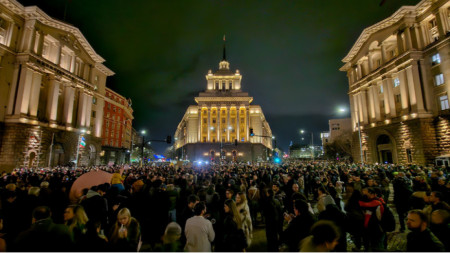
Minutes before the second and final reading, at the parliamentary budget and finance committee, of the state budget for 2026, the leader of the biggest party represented in parliament GERB Boyko Borissov halted the procedure and sent the draft bill..





 Mostly Cloudy
 Rain / Snow