What is the common thing between the protest movements in the Tahrir Square, the Maidan, the Gezi Park and Eagle’s Bridge downtown Sofia? The specifics of 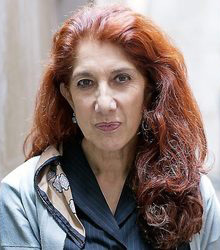 these forms of protest and the way they are carried out on public spots is the key subject in the research of sociologist Nilüfer Göle, a professor at the leading French School for Advanced Studies in the Social Sciences, Paris. She has recently had a public lecture at Sofia University St. Kliment Ohridski. In the words of the professor everything from the political demonstrations across the Arab Spring, the Kiev Maidan to the protests in Bulgaria makes us reconsider the words public space, thinking over the new forms of mobilization. Parks, cafes and squares are defined as public space – everyone has access there. People gather to debate and exchange ideas on such spots, raising later the issues towards politicians.
Above all, today’s definition of public space is outdated, Prof. Göle underlines:
On the other hand, we live in the IT era. The Cairo protesters organized themselves via Facebook and Twitter, marginalizing state-owned and controlled private media. Police remained powerless in front of social networks. We are not talking here about the anonymous crowd of mass demonstrations. The global world now communicates face-to-face.
We witness the birth of neo-nationalist movements in Europe, different from the classic nationalism. They are a symbiosis of far-right ideas and the vocabulary of leftist secularism – for instance, Marine Le Pen in France. Authoritative regimes also use new technologies while trying to control the public sphere. They are constantly coming up with new measures for tightening of morality in public spaces.
Propaganda and the fight for the overwhelming interpretation of the events turn out to be decisive now. This is another type of propaganda, not like the communist one with a single source. The party of Erdogan tried to reach an agreement with the protesters first. After its failure, it came up with the version on an international conspiracy against the Turkish government.
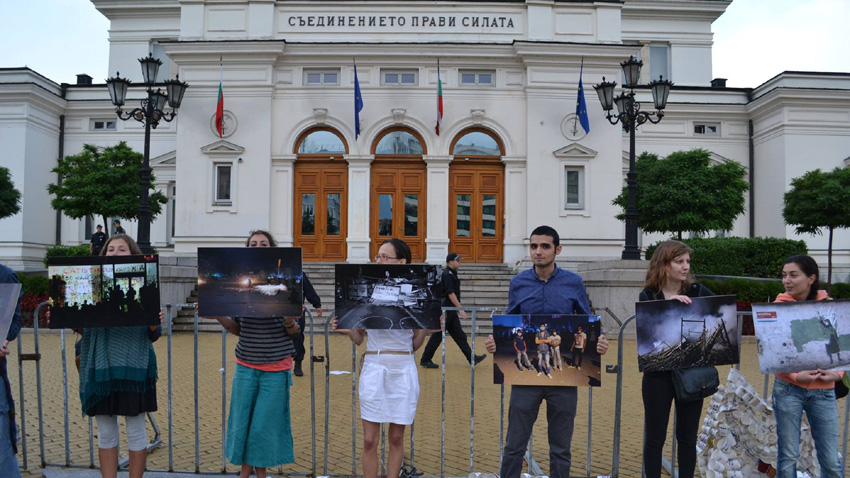
These movements have another feature – they avoid confrontation. They do not consist of professional political demonstrators – photos show their inaptitude, regarding the clothes, they do not how to react and art tools mainly express their ideas.
Asked about any similarities with the social movement from May 1968 in France and on the potential of contemporary protests for participation in representative democracy, Prof. Göle answered:
English version: Zhivko Stanchev
Photos: private archive and Miladina Monova
Bulgaria celebrates National Reading Day on the third Friday of November. The Reading Foundation is leading the initiative under the motto: “Read. For Real”. According to the OECD's PISA 2022 study, 53% of 15-year-old students in Bulgaria have..

On November 21–22, 2025, the 11th edition of the Career Fair will take place at the John Atanasov Hall in Sofia Tech Park. The forum aims to support early career orientation for young people in Bulgaria and is organized by the Bulgarian Global..

From fear and doubts to joy and support – Bulgarians react differently to the upcoming introduction of the euro on January 1, 2026. For some, it is a logical step towards Bulgaria’s integration into the EU with promises of stability..





 Cloudy
 Partly Cloudy
 Fog
Fog Clear
Clear Mostly Cloudy
 Overcast, rain
 Thunderstorms