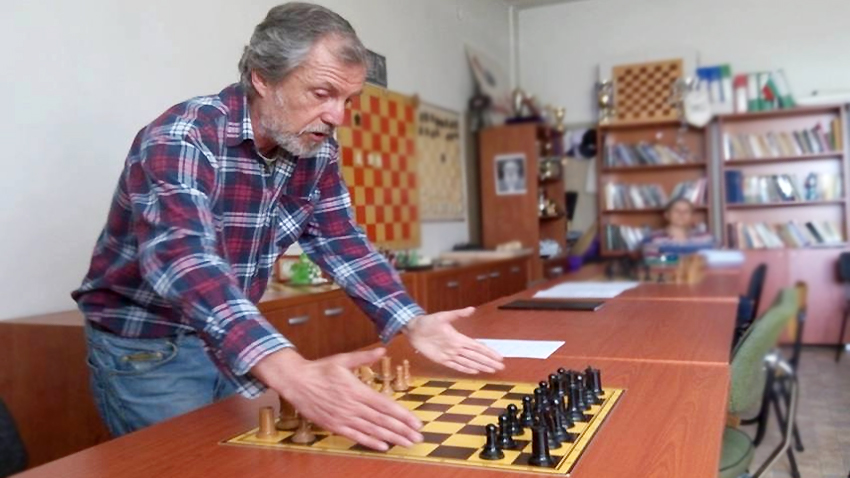
‘How do you see chess – as peace or as a war?’ asks Dr. Emil Markov. ‘As a war,’ I answer without any hesitation. ‘Why, can’t it be peace? Both parties helping each other, working on situations that improve their skills… So, chess can be peace as well,’ Markov says and I am surprised. The man is a psychiatrist, a consultant at the Chovekolyubie Centre for Mental Health in the town of Pazardjik – the only place in Bulgaria where chess is viewed as accompanying therapy. Prior to his current occupation Dr. Markov went through the Coaching School in Chess with the National Academy of Sports in Sofia. More from him on chess as a therapy method:
“Any tool can be used for therapy. Pharmacology says: there are no medicines, but doses. Any ingredient can be a medicine or poison, depending on the dose. Start breathing in a more intense manner and you will soon feel dizzy due to the increased oxygen concentration within you blood. High up in the mountain hypoxia causes mental disturbances,” Dr. Markov says.
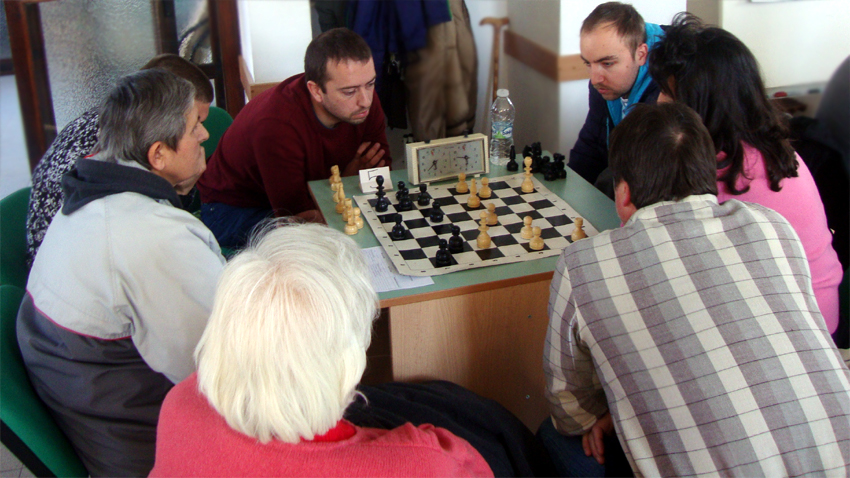
He assures me that chess can be used both as therapy and diagnostics:
“There, I put the chess board in front of you and we begin to comment how you react and why you react like that. Even a talk on chess explains a lot. A person offered me once a serious sum to tell him what was wrong with his kid, who had this diagnosis. I answered that the help would be for free, if he would play some chess with me. ‘No,’ the man answered. ‘I have given up thinking now.’ That was the end. Once you’ve given up thinking, what do you expect from this world…? Brain is a survival machine. We collect information all the time, process it, make decisions and act. The chess board tells a lot to a therapist due to the other person’s reactions. ‘This game is not for me, it is too complicated’ shows inferiority complex. Does this person want better self-confidence? In such a case he or she is welcome…”
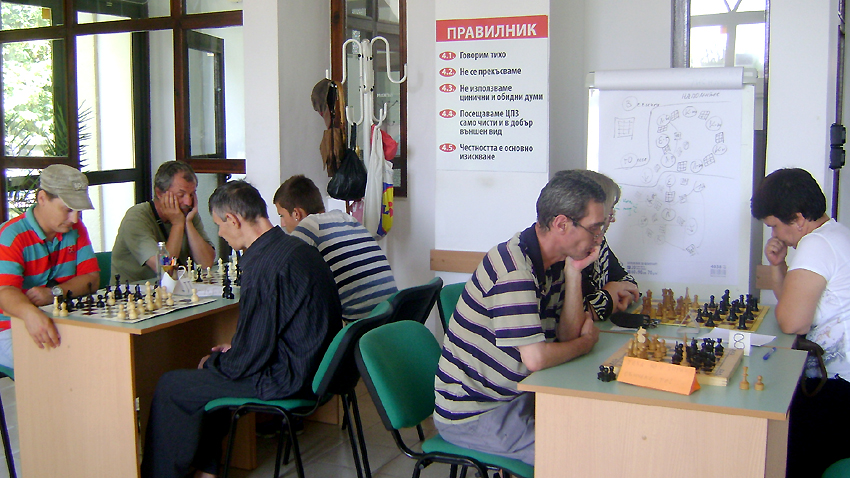
Chess can model your thinking, influencing positively any disease – depressions, Alzheimer, addictions etc. While playing chess one learns a lot about his own personality and about the person in front. This contributes to solving relations’ issues.
 “We draw schemes, named chessgrams where people are circles and their relations are the chessboard. For instance, my patient, her husband, her two grown up sons and I were drawing a board each. When I asked her on which chessgram she felt most loved, she answered: ‘On the one with you!’ – and then started to cry. However, therapy changed things for her step-by-step. Now the woman feels loved.”
Chess can be played with live figures as well – the board is 5x5 m and the people on it have to show teamwork. At the same time it is essential that the rules are clear, since contradictory rules result in mental confusion, Dr. Markov says and adds:
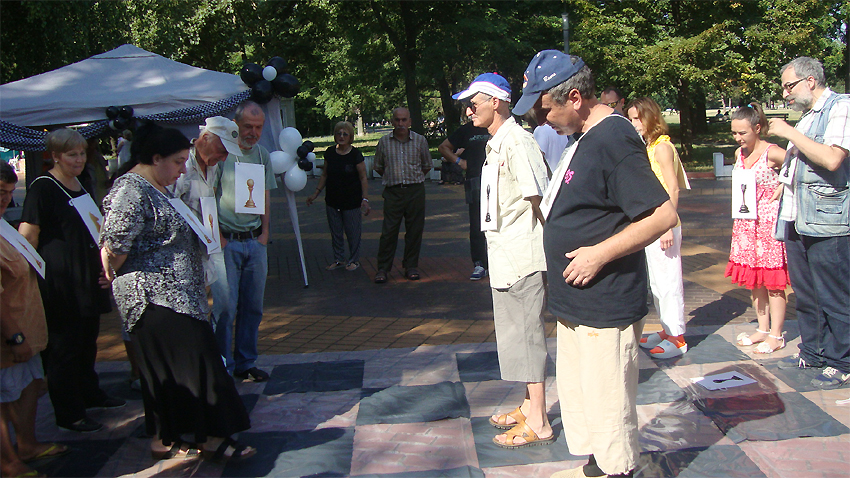
“It’s not about the wrong brain biochemistry; it’s about the controversial social rules. One can reach a dead end while trying to comply with these rules messed up. Whether you play or not, a game with contradictory rules means mistakes. Thus the discomfort created might result in psychiatry visits. And what people need is training, not treatment,” Dr. Emil Markov says in conclusion.
English version: Zhivko Stanchev
The Bulgarian minority in Romania marked a significant event with the official opening of the Bulgarian Inn in the village of Izvoarele (Hanul Bilgarilor), Teleorman County (Southern Romania)- a locality with Bulgarian roots dating back over 200 years...

The 14th edition of DiVino.Taste, Bulgaria’s leading forum for wines and winemakers, will take place from 28 to 30 November at the Inter Expo Centre in Sofia. Over 80 producers from all wine regions will participate, offering tastings of around 600 of the..
Minutes before the second and final reading, at the parliamentary budget and finance committee, of the state budget for 2026, the leader of the biggest party represented in parliament GERB Boyko Borissov halted the procedure and sent the draft bill..



 Rain / Snow
 Rain
Rain Snow
Snow Значителна облачност със сняг