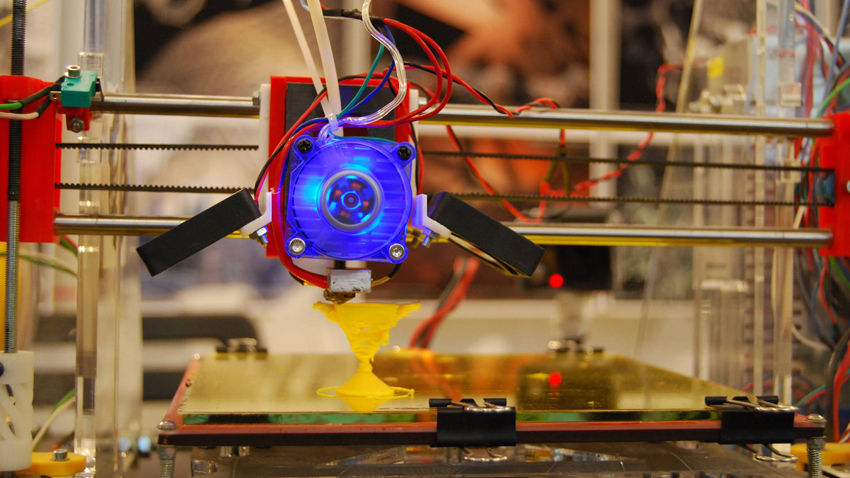
Delcho Delchev is an architect from the Transformers Association. About five years ago together with his colleagues from the Architecture, Civil Engineering and Geodesy University in Sofia he created a Urban Design Laboratory. Its most often visited unit is the first for Bulgaria Smartfablab, part of the global FABLAB network. „A hall of machines for digital prototyping” is a simple definition that architect Delcho Delchev gives for Smartfablab. He explains this is a lab for smart production offering unlimited opportunity for experiments and creativity with various materials. It is the place to also make small devices and fine electronics.

 „Recently the participants in the smart lab made devices aimed to measure the purity of the air and installed them on the balconies of their homes – and this is only one of many examples of the lab’s usefulness”, Delcho Delchev tells us. “Interest in this technology is getting keener and we are working to enlarge the lab to make it more accessible. The model we use is in fact shared use, so that many people would have access to the same equipment. The fact that many students come to us to work on their theses suggests that the price we charge is not high. People come over with various ideas, and not always we find out what happens to the items they make. One of the bizarre objects made here was a scarf which while it is on sends signals that the person wearing it has stooped and thus promotes an upright gait. Well, you can see that the smart lab is a place to make a few whacky and useful things.”
Learning about the new opportunities young people often respond with great curiosity.
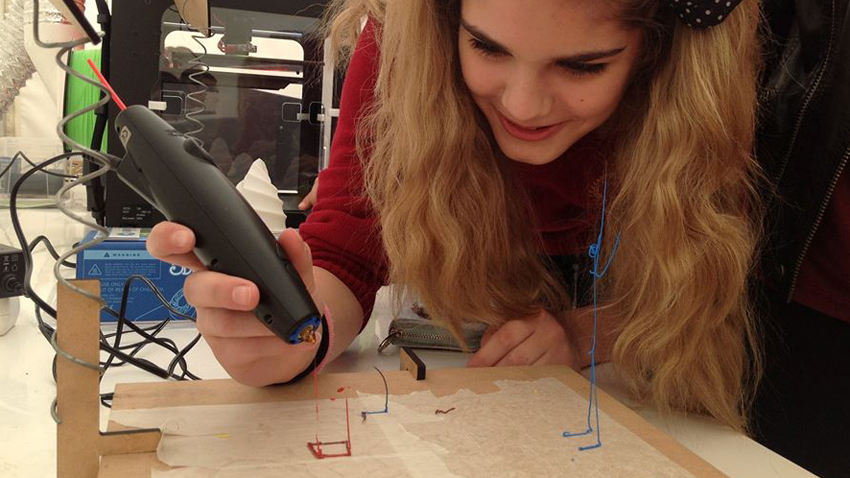
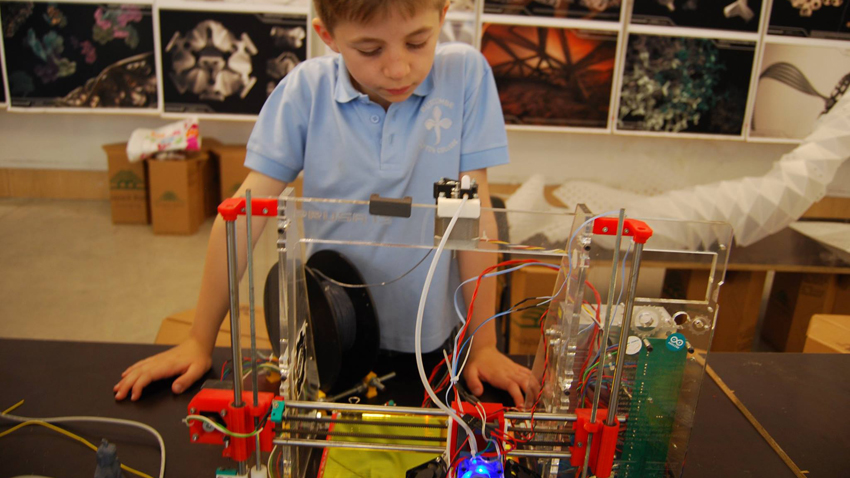
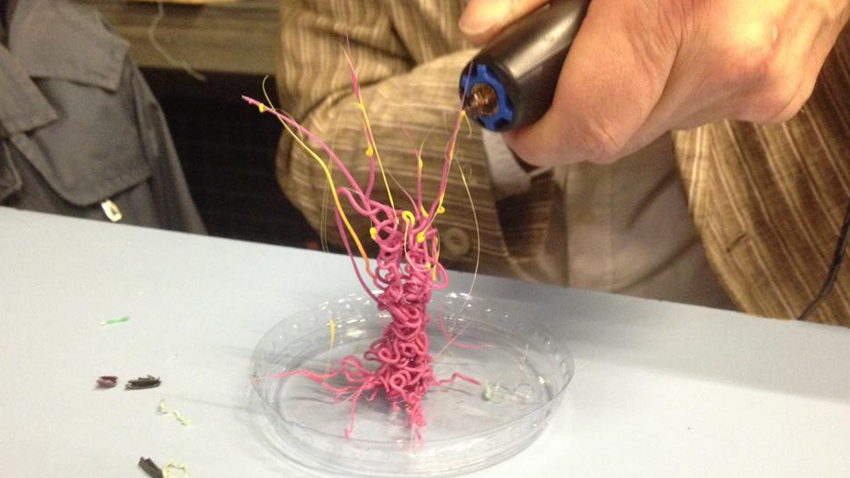 „We trust in their creativity and we try to encourage them. For this purpose we give scholarships to students so that they come and make prototypes in our lab”, architect Delchev goes on to say. “We begin a campaign aimed to promote opening similar smart labs in schools. We will try to challenge the old model of teaching various skills. Under this model all pupils get the same problems to solve. We are now live in different times, and we can offer an individual approach in creativity. We want children to choose their clubs, so that some of them will learn how to sew, others to cook and still others to make furniture. This means a door will open for enterprising thinking. Also, this approach makes work attractive. We often participate with some of the Smartfablab equipment in various exhibitions, where many children visit us. We offer them to make their own small models with 3D printers. It is in two forms: one is manual - with a 3D pen and the other is automated using a 3D laser printer. This makes it easy to understand the difference between the three-dimensional print when they catch the pen and at the same time compare it to a laser machine that is faster and more precise. Despite the advantages of the machine, we are very supportive of the hand-held technology, because every man is a good master. I watch the children and notice that they are more interested in what they have done themselves with their own hands. This is a serious sign for us that this kind of activities should be encouraged and that education should pay closer attention to them. It is time for creativity to come to the heart of education, and replace methods based on memorizing material that might turnout useless in the future.”
English Daniela Konstantinova
Photo: smartfablab.org
The diplomas from the 11th master class in radio journalism of the Bulgarian National Radio – BNR Academy were awarded at a solemn ceremony on November 14. The lectures and practical classes in modern forms of radio journalism build on the professional..
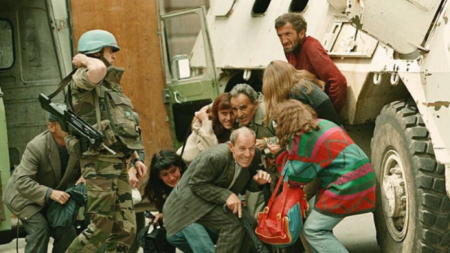
Italy investigates claims of hunting of people in Sarajevo in the 1990s The prosecutor's office in Milan has launched an investigation into shocking reports of organized "sniper safaris" in Bosnia during the war in..
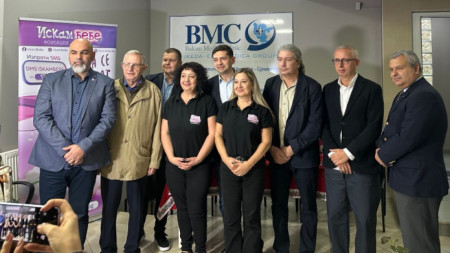
Albania and Bulgaria have joined forces in the name of one more child being born. In the late afternoon of November 7, the first-ever free reproductive medicine checkups, led by Bulgarian specialists, began in the Albanian town of Korçë — a region..






 Rain / Snow
 Snow
Snow Wet snow
 Partly cloudy, chance of snow