It was on May 1st, 1886 that 300,000 American workers in Chicago took to the streets on a strike, demanding an 8-hour working day. Since then, May 1 has become a symbol of solidarity among workers that is celebrated in many countries around the world to this day.
In Bulgaria, May 1 was marked for the first time in 1890 at the initiative of workers in the printing industry, as in 1893 it started being celebrated on a more mass scale. Today, May 1 is celebrated as International Workers’ Day, or Labour Day, and it is an official non-working holiday for Bulgarians.
Thirty years ago during the Communist rule, its celebrations consisted mainly in commending the high achievements of the planned Communist economy and the obligatory street parades, but today, in the conditions of a market economy, we return to the real meaning of this holiday that actually lies in the inherent right of each and every person to have work and to enjoy a fair payment, good and healthy working conditions and social protection.
But let us take a step backwards in time, to the year 1944 when the Communist Party came to power in Bulgaria. It was called the “mother” party and rapidly took control of all spheres of life. It created new industries and working places, it was in charge of working conditions and health care. Salaries were low but almost everyone had a job. Bulgarians did not enjoy luxury in their daily lives but were also spared abject poverty. The common market of the former Socialist countries along with the enormous Russian market engulfed all of what was produced, even if it was not always of very high quality. May 1 was gradually losing its initial meaning. What should workers fight for when they had an 8-hour working day, low but secure wages and all people had more or less the same living standard. Thus, May 1 turned into an ordinary non-working day on which people usually gathered round the table after they returned from the mandatory street manifestation before the state and political elite.
The democratic changes in Bulgaria that took place in 1990 made the situation quite different. The privatization of the industrial sector and the arrival of new employers changed things radically. The common national treasure that was accumulated and built by the entire Bulgarian nation in the course of 45 years went into the hand of private investors, part of them former members of the Communist party. An era of revival of trade unionism began, whose driving principle was to protect the rights of workers.
In their desire to make quick profits, some of the new private owners of the industrial enterprises ignored the legal requirements for a regulated working day and healthy working conditions, especially in the first years following the collapse of Socialism. Unemployment grew, the poverty line dropped even lower, hence social tension exacerbated. Two large trade unions emerged as the strongest organizations for protecting the rights of working Bulgarians – the Confederation of Independent Trade Unions in Bulgaria (CITUB) and the Podkrepa Trade Union. Also, a national tripartite council was established, uniting representatives of the government, employers and unions.
Today, there is a lot to be done in the field of workers’ rights. There are numerous cases of unhealthy working conditions, extended working hours, and no payment for overtime. It seems that nowadays May 1 is once again regaining its original purpose and meaning as more and more Bulgarians become aware of this, although street parades and demonstrations are no longer organized on this day.
Translated by Rossitsa Petcova

The diplomas from the 11th master class in radio journalism of the Bulgarian National Radio – BNR Academy were awarded at a solemn ceremony on November 14. The lectures and practical classes in modern forms of radio journalism build on the professional..
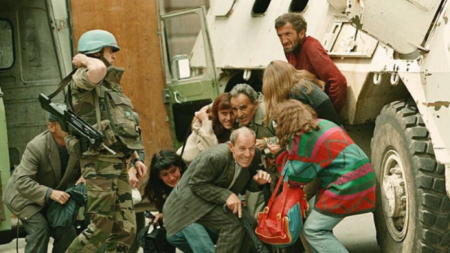
Italy investigates claims of hunting of people in Sarajevo in the 1990s The prosecutor's office in Milan has launched an investigation into shocking reports of organized "sniper safaris" in Bosnia during the war in..
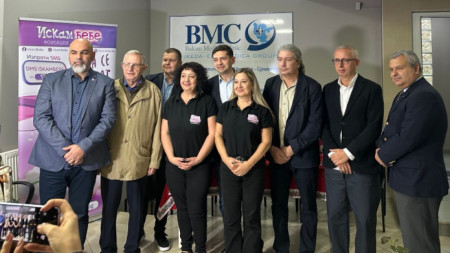
Albania and Bulgaria have joined forces in the name of one more child being born. In the late afternoon of November 7, the first-ever free reproductive medicine checkups, led by Bulgarian specialists, began in the Albanian town of Korçë — a region..




 Mostly Cloudy
 Partly Cloudy
 Cloudy