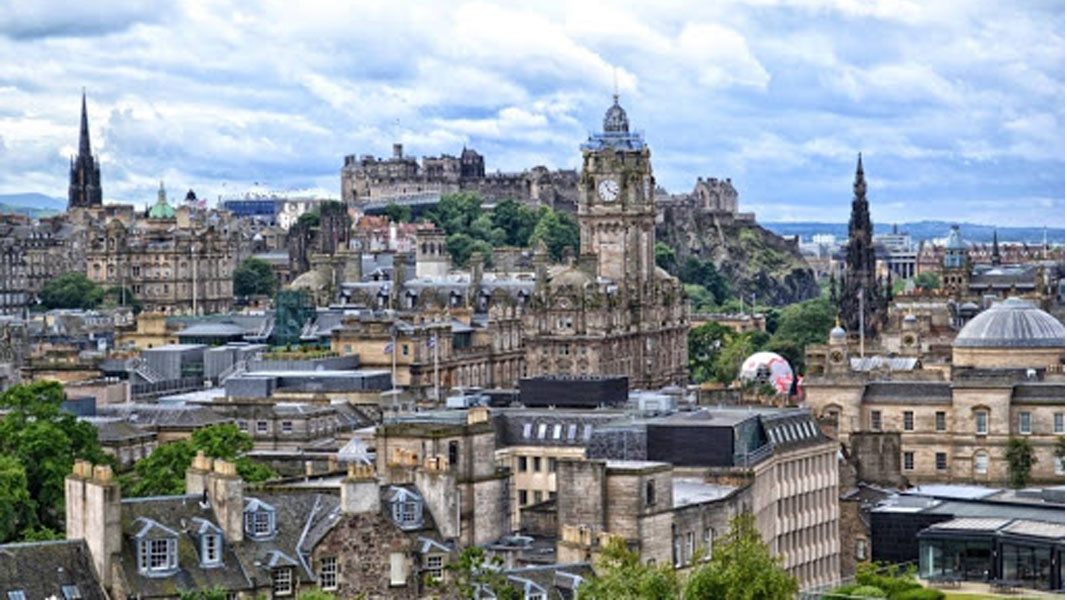
Election day in Scotland is also calm. In an interview with Radio Bulgaria, Bulgarian citizen Nelly Olova, who has been organizing the voting in the Bulgarian elections in Scotland for years, explains that there are two polling stations Edinburgh, and one in Glasgow, Aberdeen, Dundee and Perth each. She compared voter turnout for the last three parliamentary elections:

"In the 2014 and 2017 parliamentary elections, about 1,000 people voted in Scotland. In April this year, 1,353 people voted. I don't think we will be able to reach that number by the end of the day, because a lot of people are now in Bulgaria or on holiday elsewhere."
According to the Scottish Home Office from this June, the number of Bulgarians in Scotland is about 10,000, including not only adults but also children.
Nelly Olova has no data on difficulties that arose during the election day:
There was a slight tension in Edinburgh because there were two polling stations there. In April, more than 1,000 people voted there, due to the then-existing restriction on opening up to 35 polling stations in non-EU countries. Now one polling station is with a machine and the other with paper ballots. The CEC divided the people on the list into two in alphabetical order, which irritated them. Some of them have to vote with paper ballots. In the other polling stations, voting is by paper ballots. There is some disappointment in Glasgow that there are no machines.
English version Rositsa Petkova

Bulgaria celebrates National Reading Day on the third Friday of November. The Reading Foundation is leading the initiative under the motto: “Read. For Real”. According to the OECD's PISA 2022 study, 53% of 15-year-old students in Bulgaria have..

On November 21–22, 2025, the 11th edition of the Career Fair will take place at the John Atanasov Hall in Sofia Tech Park. The forum aims to support early career orientation for young people in Bulgaria and is organized by the Bulgarian Global..

From fear and doubts to joy and support – Bulgarians react differently to the upcoming introduction of the euro on January 1, 2026. For some, it is a logical step towards Bulgaria’s integration into the EU with promises of stability..





 Cloudy
 Mostly Cloudy
 Partly Cloudy
 Fog
Fog