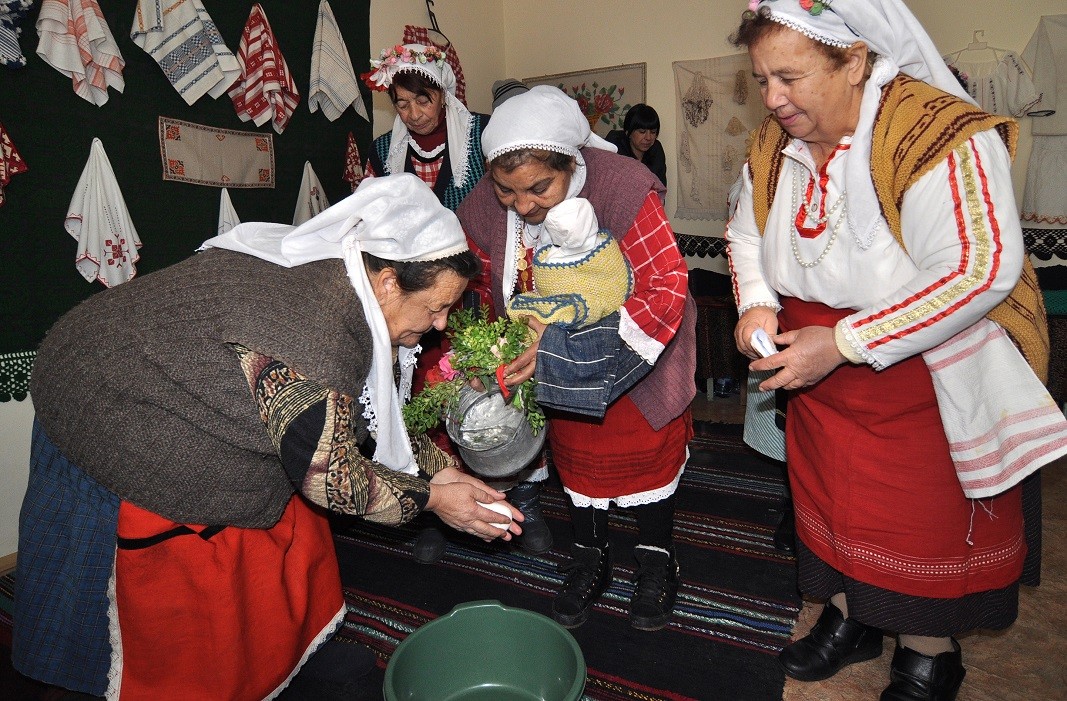
In Bulgarian tradition January 21 is Babinden, grannies’ or midwives’ day, the last in the string of festive days connected with ritual bathing. It is a day honouring the “grannies”, the local midwives and healers who once helped women give birth.
In the past Epiphany and Ivanovden, the day of St. John the Baptist, were marked on 19 and 20 January (old style). Back then Babinden came as the natural end of the triad. It should not be forgotten that when we say “new and old style” this concerns the church calendar, but Badinden does not have a Christian Orthodox equivalent. But its celebration on both dates is a way to express just how much Bulgarians respect those who help women in childbirth, and then care for the baby and the mother.
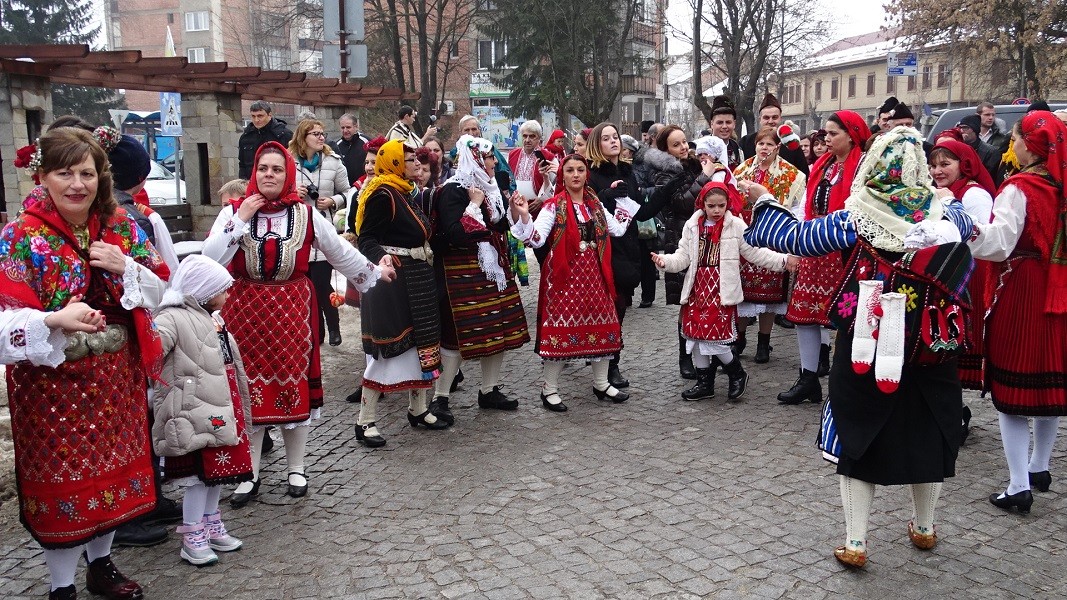
Once, on this day, the grannies would go to the houses where they acted as midwives during the year, bathed (or sprinkled the babies with water) and blessed them. The women, on their part, would pour water out for the granny to wash her hands in, and gifted her with a towel and soap. This was followed by a festive lunch at the granny’s house, with each woman bringing ritual loaves of bread, banitsa, boiled chicken, wine and rakia. The only men allowed at attend these lunches were the men who played an instrument – bagpipe or gudulka – who would play for the women. In what was then a highly patriarchal society, this was the only day that women were allowed any banter, or to make jokes or witty remarks (some quite rude) about men. The day ended with ritual bathing followed by a women’s horo dance.
There are many entertaining stories described by ethnographers, as well as jocular songs sung on Babinden. One of them is Zaigralo babino horo, Grannies Dancing the Horo, performed by Shezhana Borisova and Kunka Zhelyazkova. Find out more about this traditional feast day in Bulgaria HERE.
Editing by Albena Bezovska
Photos: archive
On 22 November, the Association of Bulgarian Folk Ensembles Abroad (ABFEA) will present its project, 'Online Catalogue of Bulgarian Horo and Other Dances', in three European cities: Lyon, Munich and Copenhagen. 'Our goal is to preserve Bulgarian..
‘The Bulgarian horo is a kind of magic — an enchanted circle that pulses with the unique energy of our spirit, our traditions and our identity,’ says journalist Milena Milotinova, who recently presented her new documentary The Magic of the Bulgarian..
The Eastern Rhodopes come to life in the heart of Sofia – with authentic flavoуrs, music and craftsmanship . Residents of the Bulgaria capital have a chance to immerse themselves in the atmosphere of Momchilgrad Municipality and its cultural and natural..




 Mostly Cloudy
 Partly Cloudy
 Cloudy
 Fog
Fog