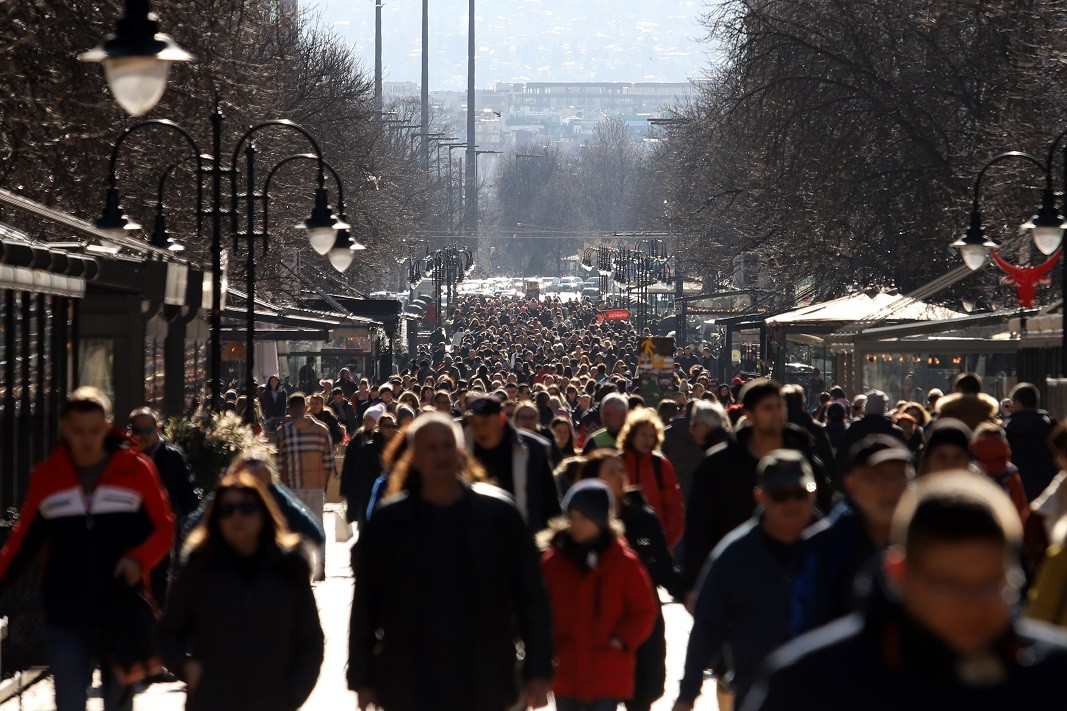
"We do not have good examples of how institutions handle crises in this country. Very often, attempts to deal with the consequences of crises evoke the impression of inadequate measures and unfairly allocated resources". The statement was made by Dr Ilina Nacheva, head of the research project Social and Psychological Impact of the Covid-19 Crisis.
A team of 9 researchers - psychologists and anthropologists - has been working on it for a year, studying three main groups of people - working parents of children up to 12 years of age, people who have lost their jobs or changed their workplace as a result of the crisis, and people with chronic illnesses who are affected in one way or another by each of the stages of the crisis. The research is being conducted through an online survey, in which any one can participate by filling in a special questionnaire on the project's social media page. The reserch is funded by the The Bulgarian National Science Fund of the Bulgarian Academy of Sciences(BAS).
"As part of the research, we conducted 45 interviews with representatives of the three groups we are studying. We have very recent data and we can now outline in broad terms what are the difficulties that we encounter in times of crisis" - says Asst. Dr. Tsvetelina Panchelieva from the Institute for Population and Human Studies at BAS
"So far, the data falls into two categories - the first being based on the emotions people were experiencing during pandemic. The most common emotion that all interview participants talked about was fear.Overall, emotions in all three groups were negative, with varying levels of anxiety, stress and sadness, but always fear coming first. This was no surprise, what did surprise us was the fact that people with chronic conditions showed the lowest levels of fear of all three groups.

Parents had the highest level of anxiety and this was due to the fact that they were placed in an extremely hard situation where they had to balance their work and personal lives 24/7 in the presence of all family members. At the other extreme were the chronically ill who had the lowest levels of fear. This has a simple explanation - they are more experienced and more resilient to crises as they have faced many difficulties in their lives, especially when it comes to their health.It is because of their experience that chronically ill people have more coping strategies to deal with crises. They are mostly concerned about the lack of information or conflicting information that comes through different channels, and about not having access to medications that in many cases are life-saving."
Dr. Panchelieva herself, analyzing the results of the study, was surprised to find that the people who coped best with the Covid-19 crisis were those who engaged in activities in more than one area of life. Not so with those who are focused only on a career or only on one occupation.
"Bulgarians who manage to combine identification, involvement, belonging to different activities, are the ones who actually manage to cope better with the pandemic crisis and in general with crises in their lives" - says Tsvetelina Panchelieva in an interview for BNR-Radio Sofia.
Compiled by: Gergana Mancheva
English version: Elizabeth Radkova
Photos: BGNES, pixabay

The diplomas from the 11th master class in radio journalism of the Bulgarian National Radio – BNR Academy were awarded at a solemn ceremony on November 14. The lectures and practical classes in modern forms of radio journalism build on the professional..
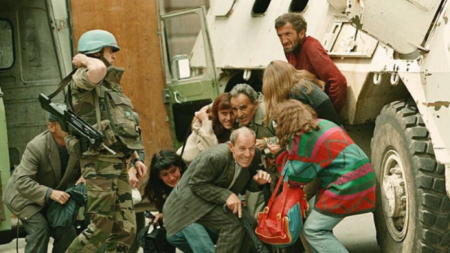
Italy investigates claims of hunting of people in Sarajevo in the 1990s The prosecutor's office in Milan has launched an investigation into shocking reports of organized "sniper safaris" in Bosnia during the war in..
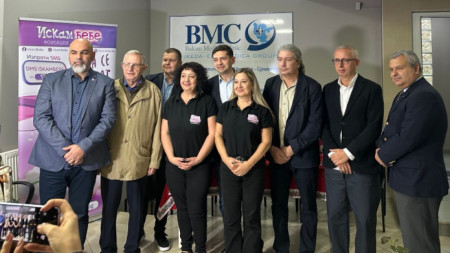
Albania and Bulgaria have joined forces in the name of one more child being born. In the late afternoon of November 7, the first-ever free reproductive medicine checkups, led by Bulgarian specialists, began in the Albanian town of Korçë — a region..






 Mostly Cloudy
 Fog
Fog Partly Cloudy
 Cloudy