Before the Wars of National Unification (1912-1918), the city authorities of the Bulgarian capital decided to immortalize the significant events of the city through a book of chronicles. It was called "The Golden Book of Sofia" and today it is among the most valuable exhibits in the Museum of Sofia. The book contains more than 50 pages, gilded around the edges, historian Teodora Meshekova tells Radio Bulgaria:
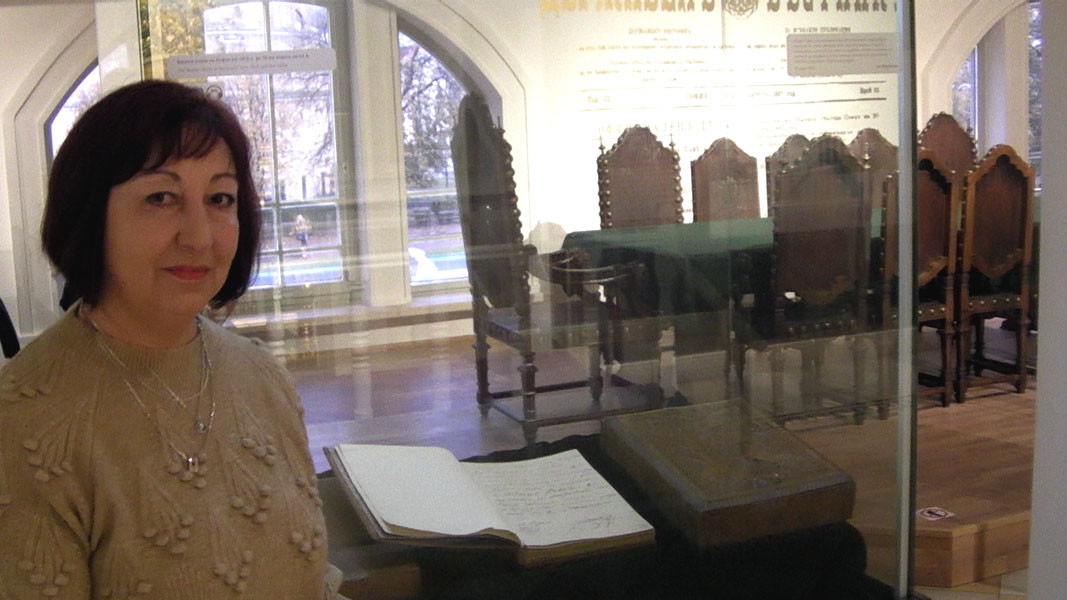
"It has a leather binding with floral geometric elements on it. In the middle is the coat of arms of the capital in its original version, created by Haralampi Tachev. The book is kept in a box with wood carvings. On the initial page is the message of Tsar Ferdinand. In his own handwriting, written in refined Bulgarian, he sends good wishes to the city, which he calls "wise Sofia", mentioning its natural beauties. On the back of the page, however, the name Eleonora is put in very small letters, very modestly. No doubt this is his second wife, Queen Eleonora, known for her proverbial modesty. On the next page of the book is the message of the 32nd Bulgarian government headed by Ivan Evstatiev Geshov. The book continues with messages, wishes and greetings in a number of languages from representatives of various delegations who had come to Bulgaria either on state visits or as guests of the Sofia Municipality. These messages are in almost all, not to say all, European languages. There are also writings in Kanji and Arabic script."

Important events in the country and in the capital were recorded in the book. The most famous mayor of the city, Eng. Ivan Ivanov, found it necessary to write down that in 1937 he invited Tsar Boris III and Prince Cyril to examine the draft urban plan of Musman. The plan was frozen after the beginning of the war, but it was to determine the development of Sofia in the years of Socialism. The book also records the solemn assembly of Sofia Municipality on the occasion of the Craiova Agreement of 1940, when Bulgaria regained Southern Dobrudzha peacefully.
"The links between Germany and Bulgaria are documented by an announcement of a charity exhibition on New Year's Eve 1941. Interestingly, it was of the so-called German-Bulgarian Chamber of Commerce and the book noted that all proceeds from tickets for this exhibition would be used for winter relief for the needy population of Sofia. It is worth noting the signature and the name of the famous merchant Stefan Charousnikov, who was president of this chamber on the Bulgarian side."
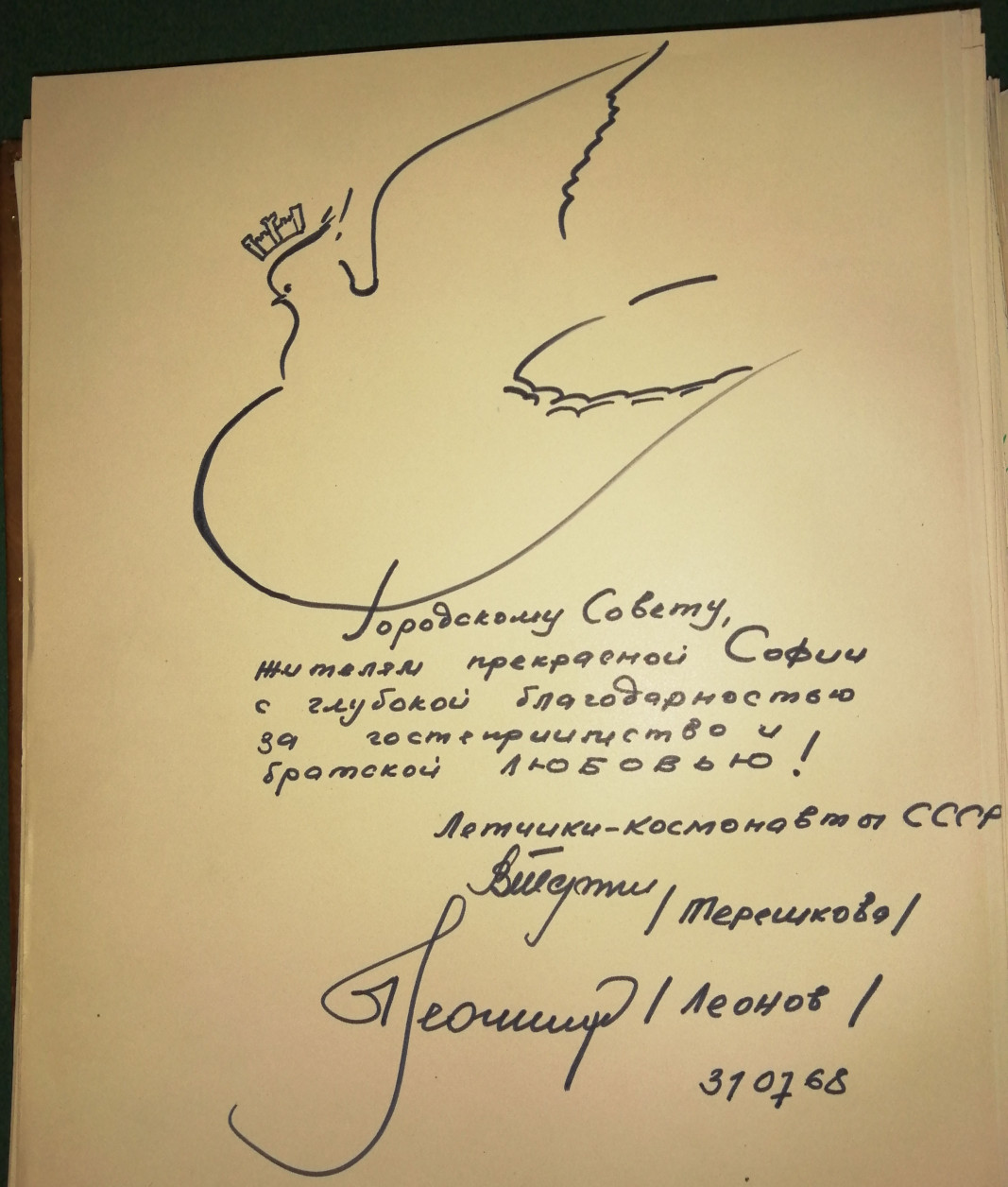
"From 1945 onwards, events began to be recorded in the chronicle book again," Teodora Meshekova continues, "these were mostly inscriptions and signatures from the USSR and former socialist countries. Perhaps among the most interesting people who visited Sofia and left their message in the book are Soviet cosmonaut-pilots Valentina Tereshkova and Leonid Leonov. Curiously, in addition to his wishes and autograph, Leonov painted the dove of peace with the so-called mason's crown, which is present in the coat of arms of Sofia (the crown at the top of the coat of arms, which contains elements of the city masonry - ed.).
"The Golden Book was completed in 1972, covering the events of two eras - the Third Bulgarian Kingdom and Communism. From it we learn that even during the Cold War, Sofia aspired to be an open city and welcomed visitors from both the West and the so-called "Third World". The book's researcher Teodora Meshekova hopes that all the messages written in different languages will be read:
"I've thought about possibly publishing a phototype edition, but there are so many languages present that a good translation with a corresponding commentary is a difficult and expensive undertaking." The Chronicles of Sofia in the Modern Age are therefore still waiting for its translators. In the meantime, the tradition continues - visitors to the city still leave their messages in a new book - its pages are now decorated with silver filigree and that is why it is called the "Silver Book" of Sofia.
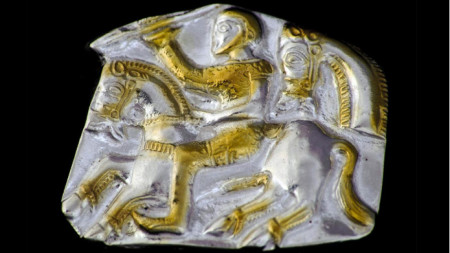
In the world of the Thracians, who had no written language, the most important messages were conveyed through art. The Letnitsa Treasure is precisely such a message — about power, beliefs, and the path to wisdom . This unique discovery, dated between..
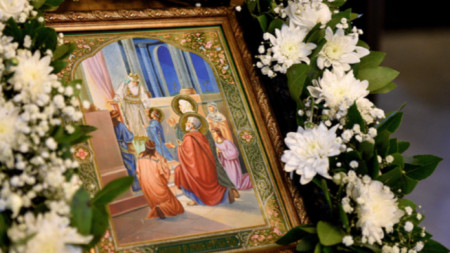
On November 21, the day of the Presentation of Virgin Mary (or the Entry of the most Holy Theotokos into the Temple), the Orthodox Bulgarians also celebrate the Day of the Christian Family and the Learning Youth. The holiday was established by the..
During a visit by the Radio Bulgaria team to the Bulgarian Orthodox Parish "Nativity of the Mother of God" in Geneva, we had the pleasure of meeting Ventseslav Sabev, the son of long-time church history professor at the Sofia Theological Seminary,..




 Partly Cloudy