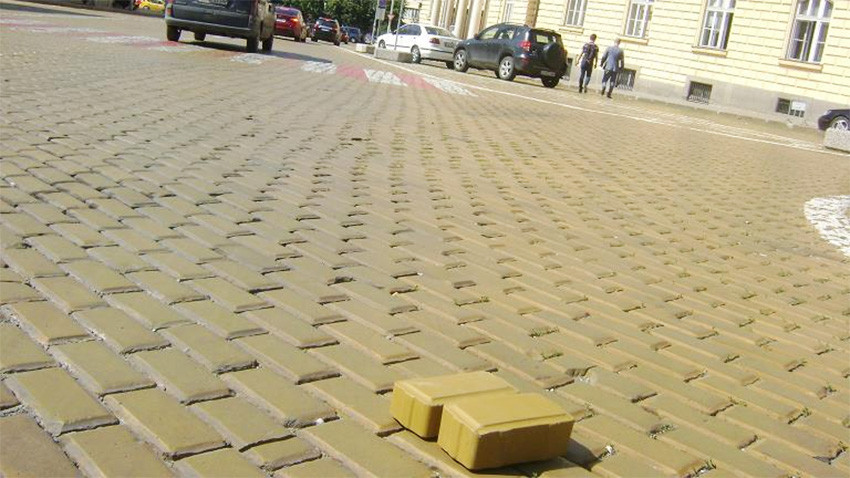
Two world wars, bombings, socialist marches with tanks and heavy trucks, civil protests and recent renovations... The emblematic yellow pavement of Sofia has experienced a lot for the past 116 years! The iconic pavement is now declared a cultural and historical heritage. It is said that the paving blocks were imported from Austria-Hungary in 1907. In the first decade of the 20th century, the central streets of the Bulgarian capital were covered with them. We still see them today in the center of Sofia near the "St. Alexander Nevsky" cathedral and the National Assembly, the former royal palace and the National Theater.
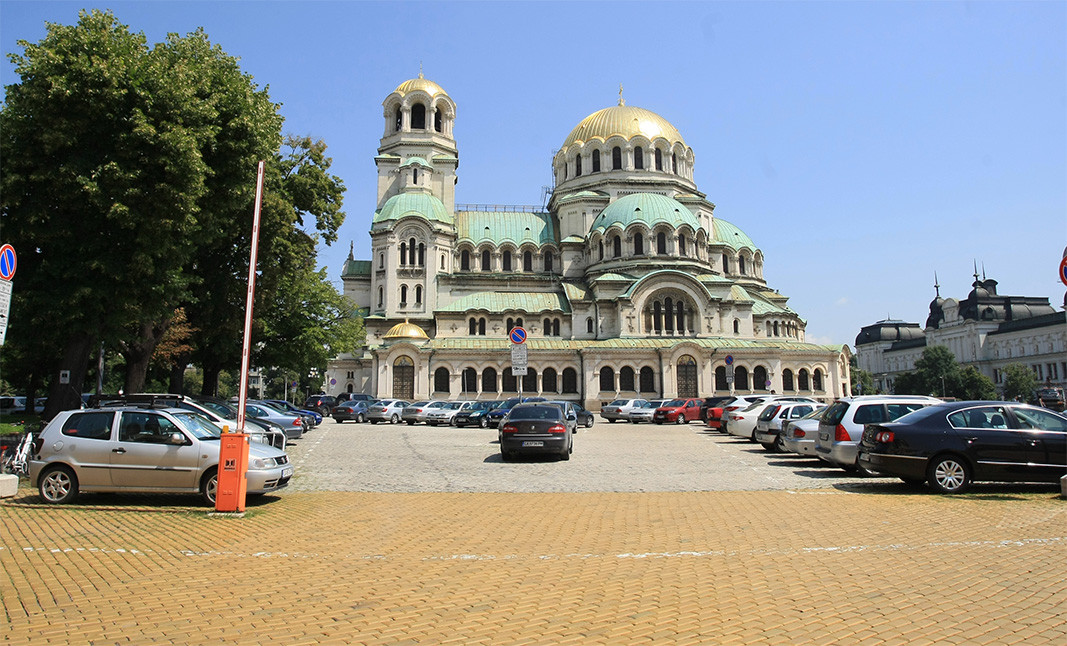
However, no one produces exactly this type of ceramic pavement blocks anymore. Imports have long been discontinued and the beautiful yellow pavement that the citizens of Sofia are so proud of is irretrievably crumbling. Attempts to constantly rearrange the paving stones and replace them with old ones do not give the desired results. These days, one of the symbols of the capital city has once again entered the news because of yet another not very successful repair attempt.
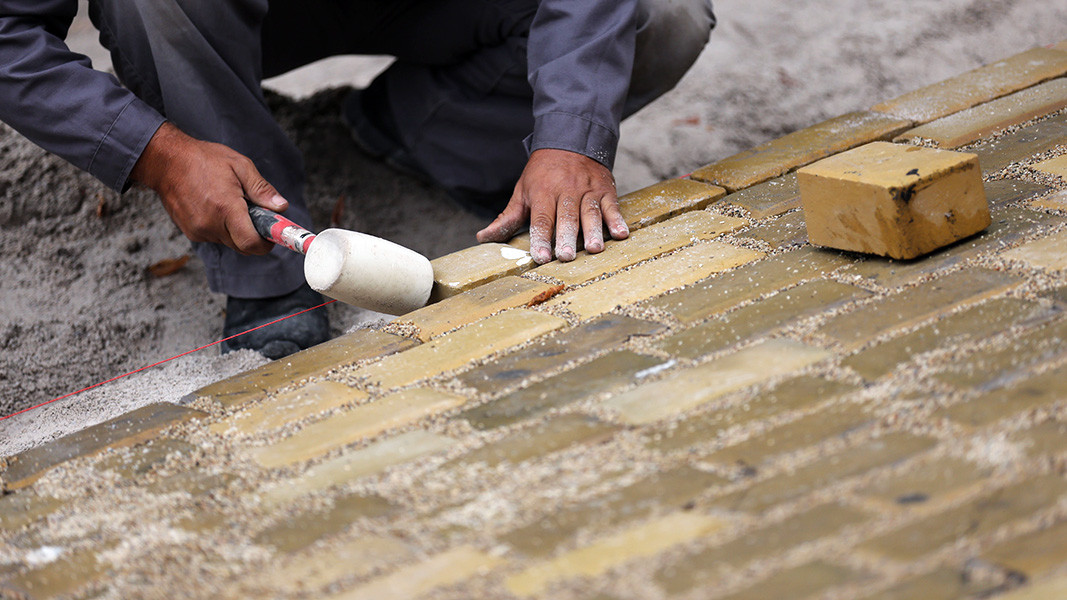
After the rearrangement of the pavement in front of the parliament, which continued for over two months, the paving stones are now in different shades of yellow to the outrage of Sofia residents. According to the office that supervises the construction site, the reason was that the pavement blocks in question were combined from different series of production and some of them were subjected to longer exploitation than others over the years.

"I have no explanation why some are very light while others are very dark," Prof. Lyuben Lakov from the Institute of Metallurgy at the Bulgarian Academy of Sciences says. Together with his colleagues he had been searching for years for a way to produce a 100 percent analogue of the 100-year-old yellow paving blocks. Some time ago, Bulgarian scientists discovered the formula of their unique structure. Now, the professor's team has perfected it and is already preparing a series of brand new yellow paving stones for Sofia.
"The cultural and historical heritage from more than 100 years ago is a benchmark. The new pavement is the same in composition, with the same physico-mechanical and other properties, as it has the same mineral phases as the original. The size, volume and color is the same. Lets mention that the original color of the pavers in Sofia is ochre, not yellow as we often define it. For us scientists, colors and nuances are so many that they are expressed in numbers. So, the paving blocks that we created are identical in color to the original," Prof. Lakov says.
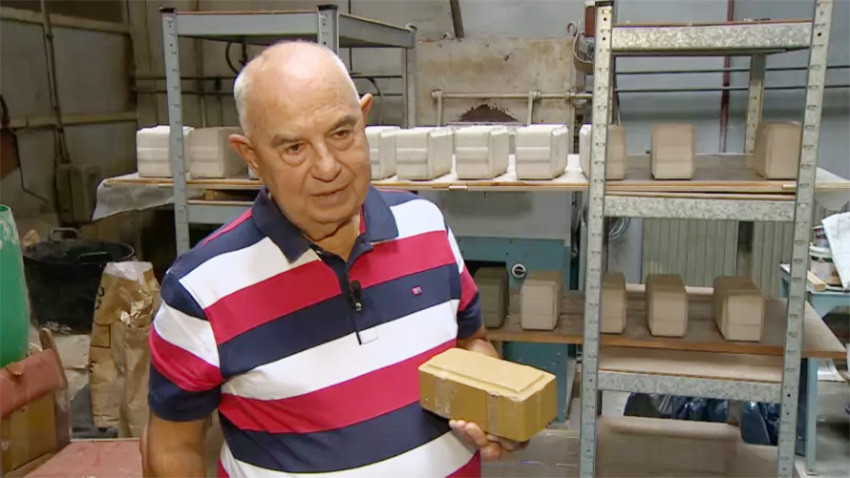
The paving blocks produced by BAS were subjected to a thorough analysis at the Technical University in Sofia. "It turns out that they are even a bit more resistant to dry and wet rubber and are not as slippery as the original. They are the same in color, size and shape," Prof. Lakov says and adds:
"We have a contract with the Municipality to produce a pilot series of 250 blocks. Our deadline is Christmas, as we work in an institute, not in a factory. However, we produce them with the appropriate mold equipment, formulation preparation, pressing, drying, heat treatment... We are ready to hand over the first series on time, but when and where our pavement will be used depends on the municipality. In my opinion, the Sofia Municipality is unlikely to invest in the construction of a factory for yellow pavement. That's what the business needs to do."
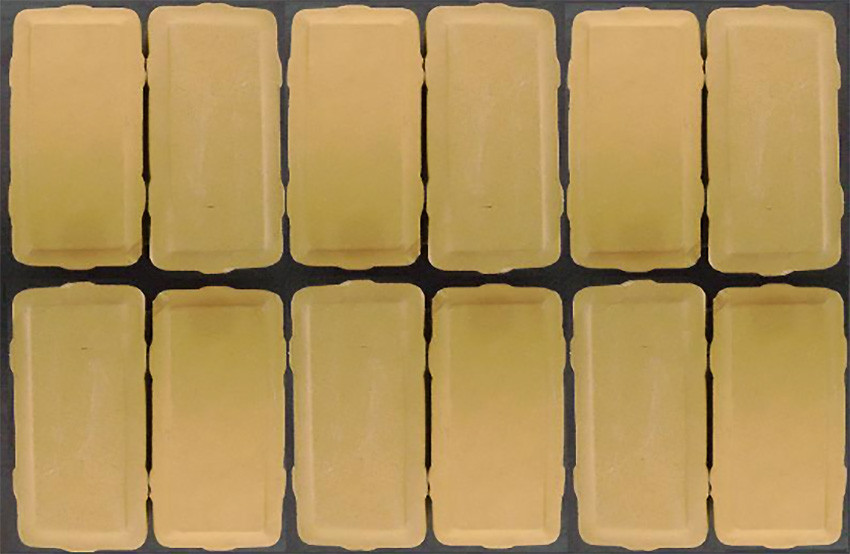
Prof. Lakov has even checked the possibility for existing factories in this country, for example those in Vidin and Kazanlak, to start the production of the specific paving blocks, so that they can be used not only for the center of Sofia but also in other cities in Bulgaria and maybe abroad.
Read more about the past and present of Sofia:
The Bulgarian minority in Romania marked a significant event with the official opening of the Bulgarian Inn in the village of Izvoarele (Hanul Bilgarilor), Teleorman County (Southern Romania)- a locality with Bulgarian roots dating back over 200 years...

The 14th edition of DiVino.Taste, Bulgaria’s leading forum for wines and winemakers, will take place from 28 to 30 November at the Inter Expo Centre in Sofia. Over 80 producers from all wine regions will participate, offering tastings of around 600 of the..
Minutes before the second and final reading, at the parliamentary budget and finance committee, of the state budget for 2026, the leader of the biggest party represented in parliament GERB Boyko Borissov halted the procedure and sent the draft bill..





 Mostly Cloudy
 Fog
Fog Partly Cloudy
 Cloudy