
Erroneous conclusions from a European Commission survey, claiming there is a risk of digital exclusion of people living in rural areas in Bulgaria, has resulted in EUR 20 million of unnecessary European funding for broadband Internet in small towns and villages, says Todor Galev, chief expert at the Applied Research and Communication Fund. The money was granted under the Operational Programme Regional Development last year whereas the survey was conducted back in 2013 by a market analysis company, not Eurostat. The results were that barely 0.2 percent of people living outside big cities had access to broadband Internet. The blunder is due to the fact that the market in Bulgaria is fragmented with some 700 suppliers, unlike other EU member-states, where there are fewer companies, but with a bigger market share. So, the 12 major companies polled in this country that operate in the cities and cover few villages around, have distorted the data. As it turned out, the ministry of transport, information technology and communication also failed to spot the discrepancy and even cited the data in an official document – the E-governance Development Strategy - 2014–2020. Thus, in the words of Todor Galev, a network will be built on EU funding, which will duplicate the existing one.
An independent survey, carried out by the Applied Research and Communication Fund shows that some 90.3 percent of the population have high-speed cable Internet and 99 percent have access to mobile Internet.
“The share of the population using basic broadband Internet, or more than 2 megabits per second, is 80.5 percent for the rural areas”, Mr. Galev says. “As far as the so-called new generation Internet is concerned, i.e. Internet with a speed exceeding 30 megabits per second, the service is used by 78.2 percent of the overall population in this country and by 58.7 percent of the rural population. By the way, this is a little over the average for the EU.”
Prices of broadband Internet in Bulgaria range between EUR 2.5 per month for speed up to 2 megabits/sec to EUR 400 – for 1 gigabit/sec. The survey further shows that it is precisely this accessible Internet that is the reason for the rapid development of information and communication technologies in this country. The progress of innovative services with high added value, also known as outsourcing is also thanks to the widespread access to the Internet. Foreign IT companies often establish their development centers in this country, after taking over the businesses of their Bulgarian partners. Database processing is another niche where our IT experts are competitive. A leading financial institutions analyzes the information from its banking in Europe here, in Bulgaria. Bulgarian companies are also successful in the development of mobile applications, oil tanker guidance software etc. Broadband Internet is probably one of the reasons for the development of the IT sector in this country. At the same time the state's role where the work of IT companies is concerned is a paltry one – and that might also explain their success.
English version: Zhivko Stanchev
Edited in English by Milena Daynova
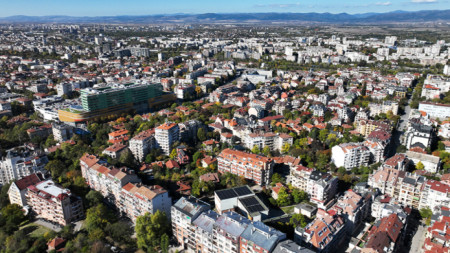
The average price of apartments sold in Sofia in the third quarter of 2025 reached €2,310 per square metre , marking an annual increase of 25.5%, according to data from Bulgarian Properties. While new developments remain popular, limited supply and..
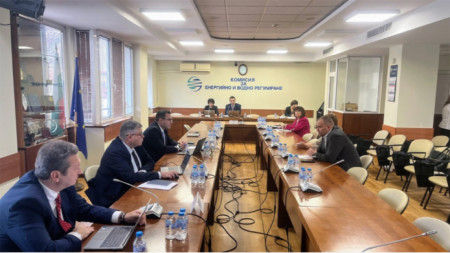
Natural gas prices in Bulgaria are set to fall by just over 4% in December , significantly higher than the previously forecast 1% drop, according to calculations by state-owned supplier Bulgargaz, reported BNR correspondent Yuliyana Kornazheva. This..

The Executive Board of the International Monetary Fund (IMF) has concluded the 2025 Article IV Consultation with Bulgaria. According to the IMF’s procedure for assessments and recommendations, domestic demand is driving a robust expansion of the..






 Overcast, rain
 Scattered showers
 Cloudy
 Mostly Cloudy
 Cloudy
 Partly cloudy, chance of rain