Increasing productivity of the real economy would help countries in transition like Bulgaria overcome the effects of the demographic crisis. This is what economist of the World Bank for Europe and Central Asia Dörte Dömeland said in Sofia while presenting a report of the international financial institution on the topic of "Productivity in Bulgaria - Trends and Opportunities."
The development of the economy of Bulgaria, just like the economies of other EU Member States, changed significantly after the economic crisis of 2009. The progress of this country before the crisis was mainly due to decisive macroeconomic reforms, the launch of EU membership talks in 2000, low taxes and relatively highly-skilled workforce. The development was further helped by the availability of free capital in the global economy.
In pre-crisis years in the period 2000-2008, Bulgaria's GDP grew by about 9.1 percent a year thanks to foreign investments. The productivity and efficiency of Bulgarian companies, however, had not been growing at the same pace. Investments have been focused mainly in labor-intensive sectors – textile production and construction. Highly specialized sectors such as finance and the IT business mark fast productivity growth, but have little contribution to GDP, because they employ a small part of the workforce. After the global financial meltdown and the subsequent crisis in the Eurozone, investments in Bulgarian economy declined significantly and increasing productivity became more important for the growth. According to Eurostat, in the period 2008-2013, GDP grew by only 1.2% provided that the EU average growth is about 1.6 percent. 400 thousand jobs have also been lost. This led to an increase in labor productivity to 3.3 percent a year, which is above the regional average value of 2.6%. However, the productivity of the industry as a whole is low - about 1 percent, while it is about 1.3% in other European countries.
Dörte Dömeland gives the following recommendations to Bulgaria:
English: Alexander Markov
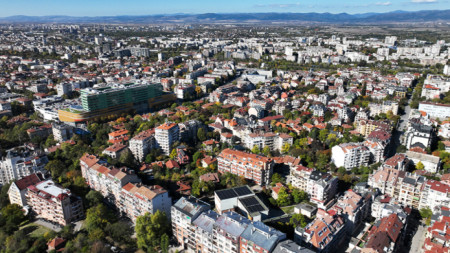
The average price of apartments sold in Sofia in the third quarter of 2025 reached €2,310 per square metre , marking an annual increase of 25.5%, according to data from Bulgarian Properties. While new developments remain popular, limited supply and..
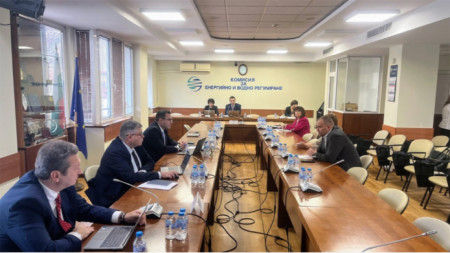
Natural gas prices in Bulgaria are set to fall by just over 4% in December , significantly higher than the previously forecast 1% drop, according to calculations by state-owned supplier Bulgargaz, reported BNR correspondent Yuliyana Kornazheva. This..
The Executive Board of the International Monetary Fund (IMF) has concluded the 2025 Article IV Consultation with Bulgaria. According to the IMF’s procedure for assessments and recommendations, domestic demand is driving a robust expansion of the..







 Overcast, rain
 Cloudy