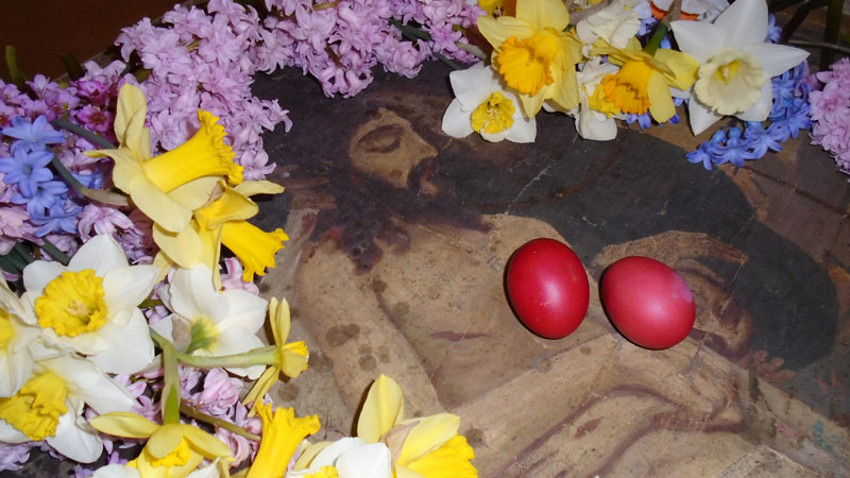
On this day, the church calls upon believers to recall of the Savior's voluntary sacrifice and His all-forgiving love. To feel the suffering of others because every pain reminds of the crucifixion of Christ. And just like a person suffering the most severe torment forgets to eat and even drink water, on Good Friday, believers do not have food or water.
In this way, they express their compassion for the suffering and relate to the crucifixion of the Savior. In the morning of Good Friday, before the service, a high table covered with the Epitaphios (Plashtanitsa) is placed in the middle of the church, symbolizing the tomb of Christ. The Gospel, the Cross and white flowers are placed on it. After the service, Orthodox Christians proceed to the symbolic tomb of Christ, to bow to the image of the Savior embroidered on the cloth, to kiss it, and then kiss the Gospel and the Cross. They also lay flowers and crawl under the table. Then they bow before the big Cross in the church and before the icons of the Holy Virgin Mary and St. John the Evangelist, and after kissing them, humbly leave the temple.
This year, the Holy Synod of the Bulgarian Orthodox Church has called on believers not to kiss or touch the Plashtanitsa, not to crawl under it, nor lay flowers and geranium, but to make the sign of the cross and a deep bow.
Editor: Darina Grigorova
English: Alexander Markov
Photo: archive
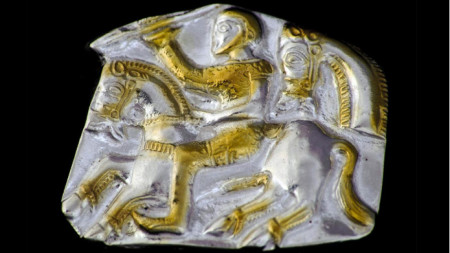
In the world of the Thracians, who had no written language, the most important messages were conveyed through art. The Letnitsa Treasure is precisely such a message — about power, beliefs, and the path to wisdom . This unique discovery, dated between..
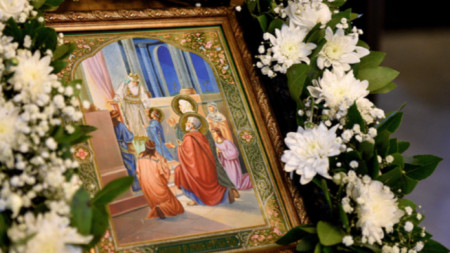
On November 21, the day of the Presentation of Virgin Mary (or the Entry of the most Holy Theotokos into the Temple), the Orthodox Bulgarians also celebrate the Day of the Christian Family and the Learning Youth. The holiday was established by the..
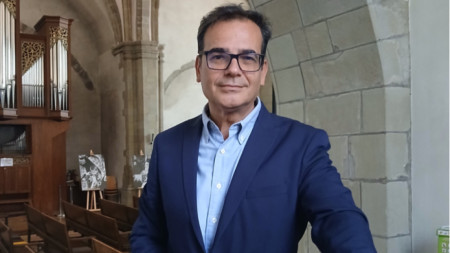
During a visit by the Radio Bulgaria team to the Bulgarian Orthodox Parish "Nativity of the Mother of God" in Geneva, we had the pleasure of meeting Ventseslav Sabev, the son of long-time church history professor at the Sofia Theological Seminary,..






 Mostly Cloudy
 Partly Cloudy
 Cloudy